Ice Maker Energy Use: Watts, Cost, And Efficiency
At a Glance Ice maker energy use directly impacts your electricity bill, with typical portable units consuming 100 to 150 watts and built-in models using 200 to 350 watts. At the U.S. average electric…
Ice maker energy use directly impacts your electricity bill, with typical portable units consuming 100 to 150 watts and built-in models using 200 to 350 watts. At the U.S. average electricity rate of $0.14 per kilowatt-hour, daily operating cost ranges from about $0.07 to $0.40. The most important factor for savings is choosing an Energy Star certified model or a portable unit, which can cut energy consumption by 20 to 30 percent. Simply knowing your ice maker's wattage and your local utility rate lets you budget accurately and select the most efficient appliance for your household.
Keeping your drinks perfectly chilled often means relying on an ice maker. But have you ever stopped to think about how much power these handy appliances use? Understanding your Ice Maker Energy Use: Watts, Cost, And Efficiency is key to managing your electricity bills and making smarter choices for your home.
We’ll break down what watts mean, how much it costs to run your ice maker, and how to find more efficient models, helping you save money and be more eco-friendly without sacrificing your favorite cold beverages.
Key Takeaways
- Ice maker energy consumption is measured in watts, affecting your electricity bill.
- The cost to run an ice maker depends on its wattage, usage, and local electricity rates.
- Older or larger ice makers generally use more energy than newer, smaller, or more efficient models.
- Understanding efficiency ratings helps you choose an ice maker that saves money and energy.
- Simple habits can significantly reduce your ice maker’s overall energy consumption.
- Portable ice makers often use less energy than built-in units but produce less ice.
How Much Power Does Your Ice Maker Really Use?
The amount of electricity an ice maker uses is primarily measured in watts. This number tells you how much energy the appliance consumes at any given moment it’s running. Think of watts like the speed at which energy is used.
A higher wattage means it uses energy faster. Most household ice makers, whether they are part of a refrigerator or a standalone unit, will have their wattage listed on the appliance’s information sticker, usually found on the back or inside the door.
For refrigerators with built-in ice makers, the entire appliance’s energy use is what’s listed. The ice maker itself is a smaller component of that. Standalone ice makers, often called portable ice makers, will have their own specific wattage listed.
These are generally designed to be more energy-efficient because they are not part of a larger cooling system.
For the most accurate wattage reading, check the information sticker on the back or inside the door of your ice maker—standalone units often show lower power consumption than refrigerator-based models.
Understanding Ice Maker Wattage
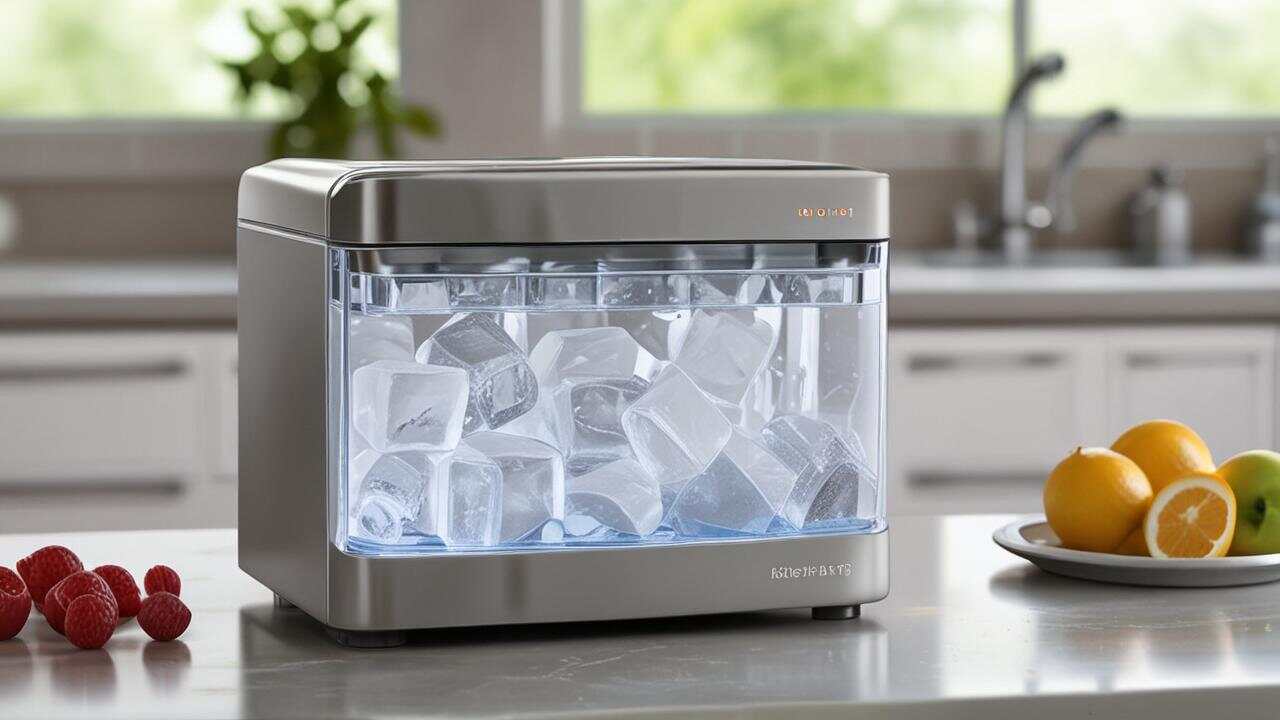
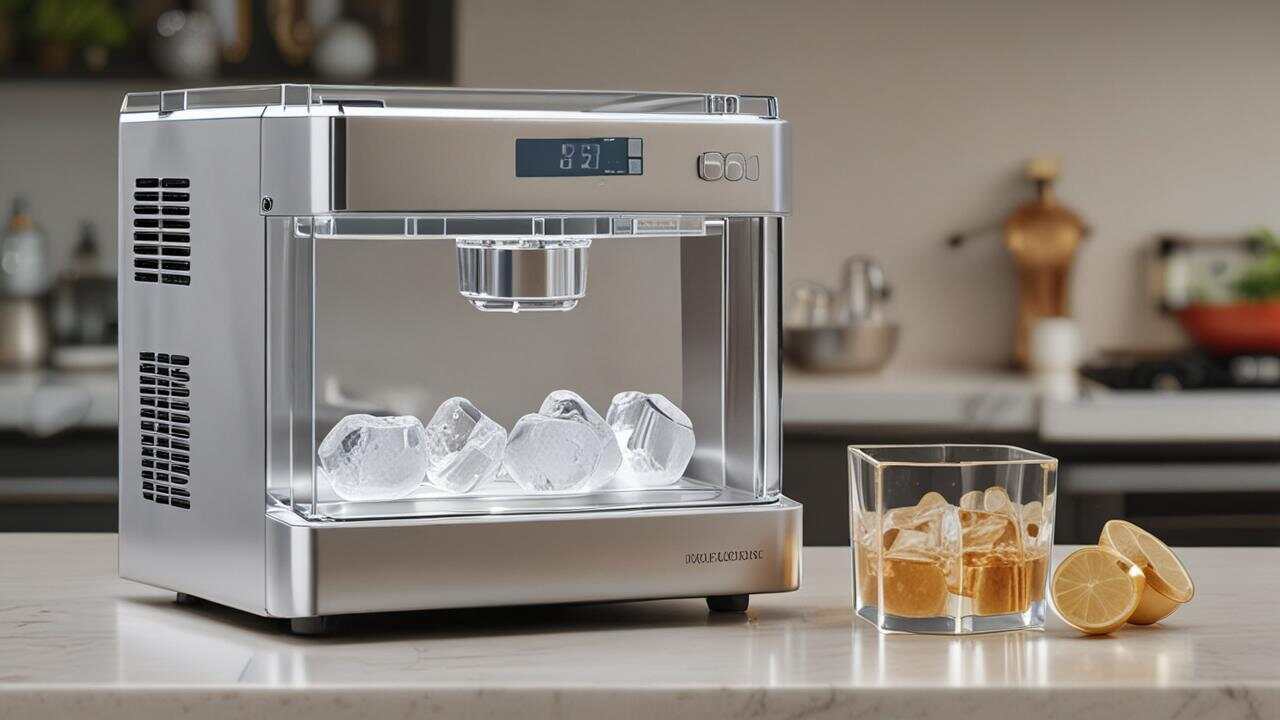
The wattage of an ice maker can vary quite a bit. A small, portable ice maker might draw between 100 to 200 watts while it’s actively making ice. This is similar to running a light bulb or a small fan.
Refrigerators with ice makers have a more complex energy profile. The compressor that cools the freezer compartment uses the most energy, but the ice maker mechanism itself uses a smaller portion, typically adding only a few extra watts when it’s actively freezing or dispensing.
The actual Ice Maker Energy Use: Watts, Cost, And Efficiency is not just about the peak wattage. It also depends on how often the ice maker runs. If you use a lot of ice, your ice maker will be working more frequently.
This means it will draw power for longer periods, increasing its overall energy consumption and cost.
Factors Influencing Wattage
- Type of Ice Maker: Built-in refrigerator ice makers are part of a larger system. Portable ice makers are standalone units.
- Size of the Unit: Larger ice makers, especially commercial ones, will naturally use more power.
- Age of the Appliance: Older models are often less energy-efficient than newer ones.
- Ambient Temperature: Warmer room temperatures can make the ice maker work harder to freeze water.
Calculating the Cost of Ice
Knowing the wattage is the first step. The next is figuring out how that translates into actual money spent on electricity. The cost of running any appliance is a combination of its power consumption (watts), how long it runs (hours), and the price you pay for electricity in your area (kilowatt-hours, or kWh).
To calculate the cost, you first need to know your local electricity rate. This is usually found on your monthly utility bill. Rates are typically expressed in cents per kWh.
For example, if your rate is 15 cents per kWh ($0.15/kWh), that’s the price you pay for every 1,000 watts used for one hour.
The Energy Cost Formula
The basic formula to estimate the cost is:
Cost = (Wattage / 1000) Hours of Use Cost per kWh
A typical ice maker running 8 hours a day at 15 cents per kWh can add about $6.75 to your monthly electricity bill—a small but measurable expense.
Let’s say you have a portable ice maker that uses 150 watts and you run it for 10 hours a day. If your electricity costs $0.15 per kWh, the daily cost would be: (150 / 1000) 10 $0.15 = $0.225 per day. Over a month (30 days), this adds up to $6.75.
This might seem small, but it’s an important part of understanding your overall Ice Maker Energy Use: Watts, Cost, And Efficiency.
Comparing Costs: Built-in vs. Portable
It’s harder to pinpoint the exact cost for a refrigerator’s ice maker because it’s part of the larger appliance. However, estimates suggest that the ice maker function can add between $5 to $15 per month to your electricity bill, depending on usage and the refrigerator’s efficiency. Portable ice makers, while they have a direct cost, are often more predictable.
Their cost depends entirely on how often you use them.
Maximizing Ice Maker Efficiency
Efficiency is a crucial factor in reducing your Ice Maker Energy Use: Watts, Cost, And Efficiency. An energy-efficient ice maker uses less electricity to produce the same amount of ice. This is often achieved through better insulation, more advanced cooling systems, and smarter design.
When you’re shopping for a new ice maker, look for energy ratings. In some regions, appliances are given an Energy Star certification, indicating they meet strict energy efficiency guidelines set by the government. While not all ice makers have this label, you can still compare models based on their listed wattage and features.
Even without an Energy Star label, comparing wattage and insulation features across models is an effective way to gauge an ice maker's efficiency.
Choosing the Right Ice Maker
Consider your ice needs. If you only need a few cubes for your evening drink, a small portable ice maker might be perfect and very energy-efficient. If you host frequent parties or have a large family, you might need a larger unit, but it’s worth looking for the most efficient model available in that size category.
Some ice makers are designed to make ice faster, which means they might use more watts in short bursts. Others make ice slower but use fewer watts over a longer period. The overall energy consumption can be similar, but the speed might be a factor in your decision.
Features That Boost Efficiency
- Good Insulation: Helps keep the freezing chamber cold with less effort.
- Smart Sensors: Detect when the ice bin is full and pause production to save energy.
- Efficient Compressors: Modern compressors are designed to use less power.
- Thicker Door Seals: For refrigerators, good seals prevent cold air from escaping.
Tips to Reduce Your Ice Maker’s Energy Footprint
Beyond choosing an efficient model, there are several practical things you can do to lower your ice maker’s energy consumption. These simple habits can make a noticeable difference in your electricity bill and help the environment.
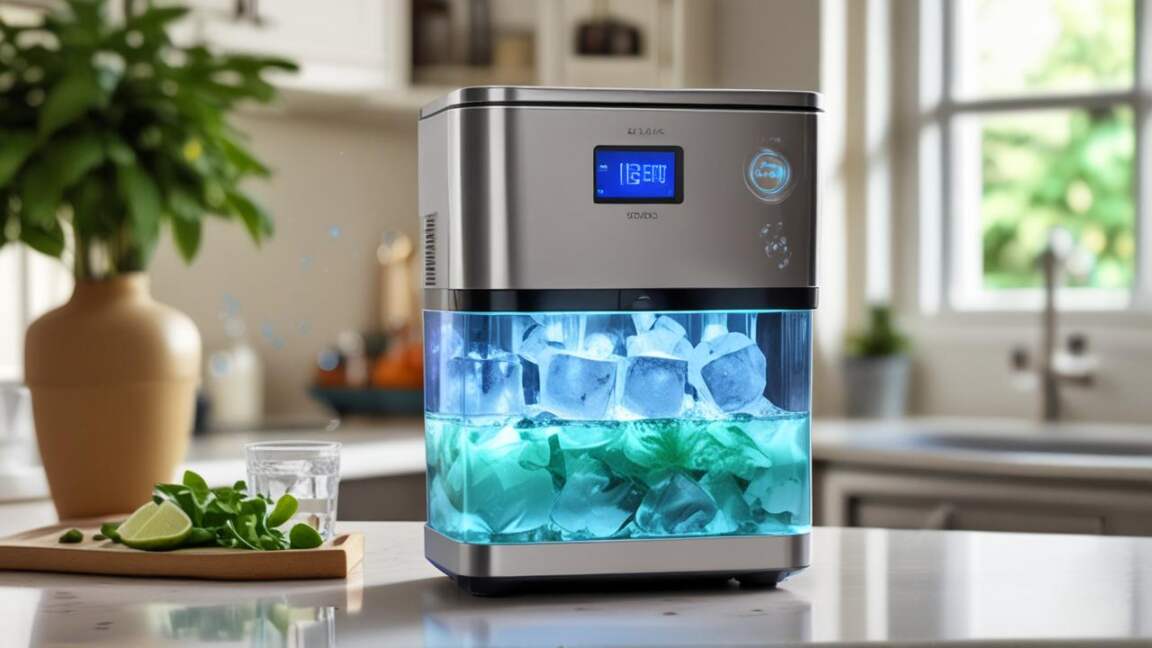
First, think about where your ice maker is located. For portable units, placing them in a cooler spot in your kitchen, away from direct sunlight or heat-producing appliances like ovens, can help. This means the unit won’t have to work as hard to maintain its freezing temperature.
Smart Usage Habits
First, only make the ice you need. If you have a large bin full of ice and it’s not being used, consider turning off the ice maker or emptying some ice. This prevents unnecessary energy use.
Second, if you have a refrigerator with an ice maker, ensure the freezer door is sealed properly. Check the door gasket for any tears or gaps. A good seal prevents cold air from escaping, which makes the refrigerator’s compressor run less often, indirectly saving energy.
Placing your portable ice maker in a cooler area away from ovens and direct sunlight can significantly reduce its energy consumption by easing the cooling workload.
Next, clean your ice maker regularly. For portable units, this means following the manufacturer’s instructions for cleaning the water reservoir and ice chute. For refrigerator ice makers, ensure the ice chute is clear of blockages and that the ice bin is easily accessible.
Then, when it comes to refrigerator ice makers, avoid leaving the freezer door open for extended periods. Every time you open the door, cold air escapes, and the appliance has to work harder to cool down again. This increased workload also affects the ice maker’s performance and energy use.
Finally, if you’re going away for an extended period, consider turning off your ice maker. For portable units, this means unplugging them. For refrigerator ice makers, you can often disable the function through your refrigerator’s control panel or by turning off the water supply to the ice maker.
Maintenance Matters
Regular maintenance is key to efficient operation. A clean water filter (if your model has one) ensures water flows smoothly, and a clean ice maker mechanism can operate without strain. Check your user manual for specific cleaning and maintenance recommendations for your model.
Understanding Different Ice Types and Their Energy Impact
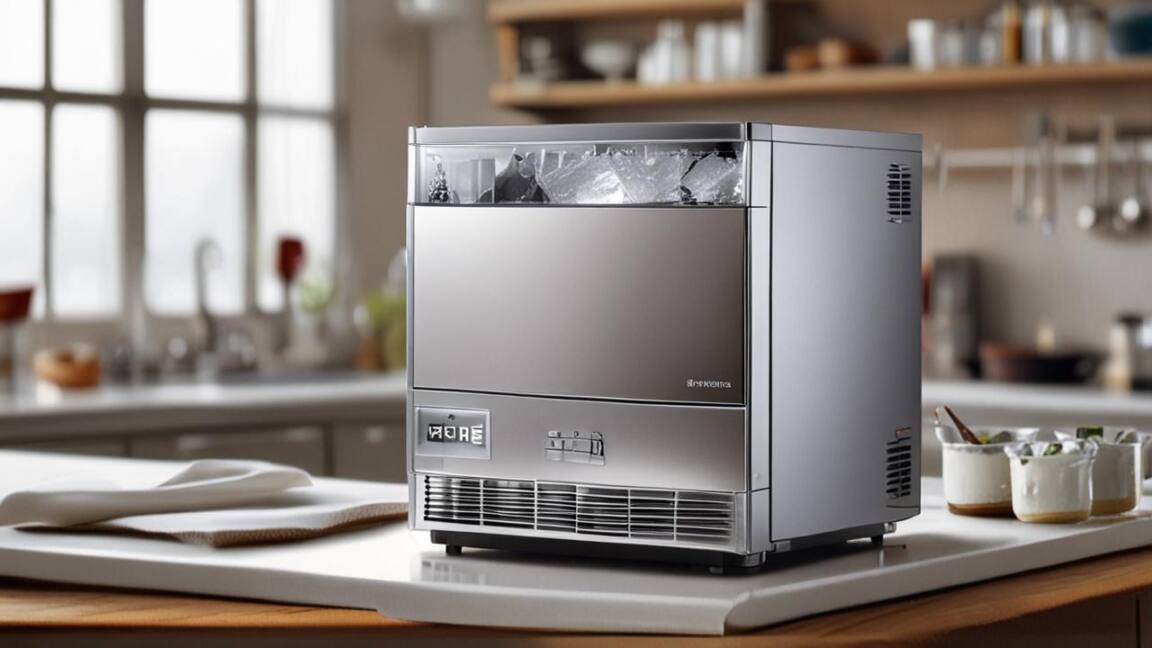
While the core function of making ice is similar across different ice makers, the type of ice produced can sometimes be related to the machine’s design and, consequently, its energy use. Most common ice makers produce crescent-shaped ice, cubes, or small nugget ice. The energy required to produce these different shapes is generally comparable for most home units.
However, some specialized ice makers might produce different types of ice, like clear ice or crushed ice, which can involve slightly different freezing or processing steps. For example, making crystal-clear ice often requires a slower freezing process or water filtration that can influence how long the machine runs and therefore its total energy consumption. When considering Ice Maker Energy Use: Watts, Cost, And Efficiency, the type of ice is usually a secondary factor compared to the machine’s overall design and wattage.
Be cautious when comparing ice makers: commercial units, which produce large volumes of ice, consume far more energy than residential models and are not designed for home use.
Clear Ice vs. Standard Ice
Clear ice, which is often preferred for its aesthetic appeal and slower melting rate, is typically made by systems that remove impurities from the water before freezing. This process can sometimes take longer. Machines that produce clear ice may have a slightly higher energy draw or longer cycle times compared to machines that produce cloudy ice, which contains trapped air and impurities.
Nugget ice makers, popular for their soft, chewable texture, often use a process of compressing and freezing ice. These machines can be quite efficient for their size but might have different wattage requirements than traditional cube makers. Always check the specific energy ratings for any ice maker you are considering, regardless of the ice type it produces.
Commercial Ice Makers
It’s important to note that commercial ice makers, found in restaurants and bars, operate on a much larger scale and consume significantly more energy than residential models. Their wattage can be in the hundreds or even thousands, and their daily ice production is vastly higher. When discussing Ice Maker Energy Use: Watts, Cost, And Efficiency for a home setting, we are primarily focused on the smaller, domestic units.
Frequently Asked Questions
How many watts does a typical home ice maker use?
A typical portable home ice maker uses between 100 to 200 watts when it is actively making ice. A refrigerator’s ice maker uses a smaller portion of the refrigerator’s total energy consumption.
What is the most energy-efficient type of ice maker?
Generally, newer models with Energy Star certifications are the most efficient. Smaller, portable ice makers can also be very efficient for personal use, as they are not part of a larger cooling system.
Does the ice maker in my refrigerator use a lot of electricity?
The ice maker itself uses a modest amount of energy, but it contributes to the refrigerator’s overall energy use. The main energy draw comes from the compressor. Proper maintenance and avoiding leaving the door open helps manage this.
How can I reduce my ice maker’s energy cost?
To reduce costs, ensure your ice maker is clean and well-maintained, place portable units in cooler locations, only make ice as needed, and check your refrigerator’s door seals for leaks.
Is it cheaper to buy ice or run an ice maker?
For moderate to heavy ice users, running an energy-efficient ice maker is usually cheaper in the long run than constantly buying bags of ice. The initial cost of the machine is offset by savings over time, especially when considering Ice Maker Energy Use: Watts, Cost, And Efficiency.
How often should I clean my ice maker?
Most manufacturers recommend cleaning portable ice makers every few weeks or as indicated in the user manual. Regular cleaning helps maintain efficiency and prevents performance issues.
Final Thoughts
Understanding your ice maker’s power needs helps you save money and energy. By checking wattage, calculating costs, and choosing efficient models, you can enjoy cold drinks guilt-free. Simple habits also make a big difference in managing your Ice Maker Energy Use: Watts, Cost, And Efficiency.