How To Restore Rusted Cast Iron
At a Glance Rusted cast iron can be fully restored using common household items like vinegar and baking soda, depending on the severity of the rust. Assessing the rust level is critical because light…
Rusted cast iron can be fully restored using common household items like vinegar and baking soda, depending on the severity of the rust. Assessing the rust level is critical because light rust requires only gentle scrubbing, while moderate to heavy rust may need a vinegar soak or more intensive methods. Proper cleaning followed by thorough seasoning ensures the pan's non-stick surface and durability are revived, saving money and preserving cookware for generations.
Finding a beloved cast iron pan covered in rust can be disheartening, but don’t toss it out just yet! Bringing an old, rusty piece of cast iron back to life is totally doable and incredibly rewarding. You’ll be able to cook with it again, enjoying those perfect sears and even heating cast iron is famous for.
Learning How to Restore Rusted Cast Iron means saving money and preserving cookware that can last for generations. Let’s get your cast iron looking and cooking like new again!
Key Takeaways
- You can successfully remove rust from cast iron using common household items.
- Proper cleaning and seasoning are crucial steps for a lasting restoration.
- Different rust levels might require slightly different approaches.
- Restoring cast iron preserves valuable cookware and saves money.
- A well-restored cast iron pan offers superior cooking performance.

Why Your Rusted Cast Iron Deserves a Second Chance
Seeing rust on your cast iron cookware might make you think it’s ruined. That’s a common worry, but the good news is that cast iron is very forgiving. Rust happens when the iron is exposed to moisture for too long.
Luckily, this is usually a surface issue. With a little effort, you can peel away that rust and reveal the strong, reliable cooking surface underneath.
Restoring cast iron isn’t just about making it look pretty. It’s about bringing back its incredible cooking capabilities. Properly seasoned cast iron develops a natural non-stick surface.
It heats evenly and holds that heat, making it perfect for everything from frying eggs to baking cornbread. You’re not just fixing a pan; you’re reviving a kitchen workhorse that can serve you for years to come.

Assessing the Rust: How Bad Is It?
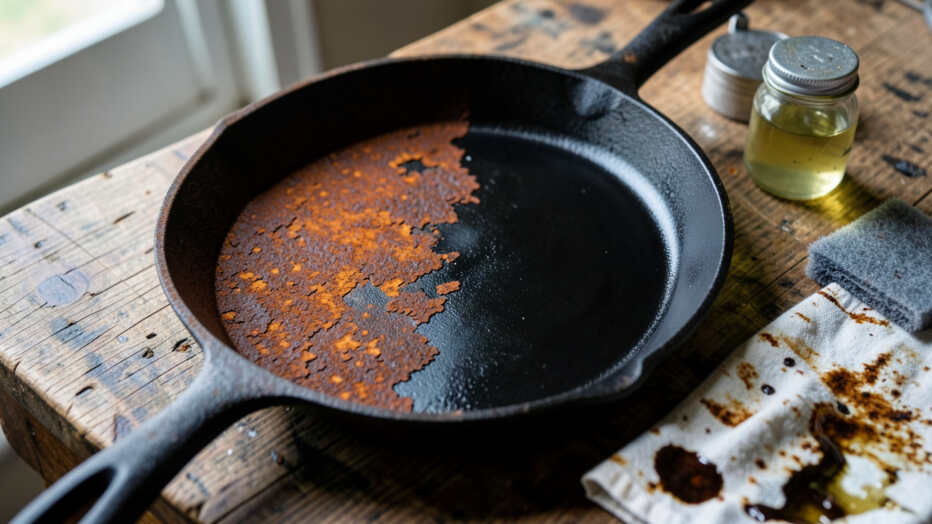
Before you start scrubbing, take a good look at the rust. The level of rust will help you decide which cleaning method is best. Is it just a few orange spots, or is the entire pan covered in a thick, flaky layer?
Light Rust
Light rust is usually a few small, orange patches. These are often found on areas that didn’t get seasoned perfectly or where moisture might have sat for a short time. This type of rust is the easiest to deal with.
Moderate Rust
Moderate rust covers more of the surface. You might see a reddish-brown coating that feels rough to the touch. It’s starting to pit the surface slightly.
This will require a bit more elbow grease.
Heavy Rust
Heavy rust looks like a thick, flaky layer of orange or brown. In severe cases, the iron might feel pitted or even have small holes. This is the most challenging to fix, but often still possible with patience.

Methods for Removing Rust: The Gentle Approach
When dealing with light to moderate rust, you can often use simple, non-abrasive methods. These methods are great because they are gentle on your pan and use things you likely already have at home.
Vinegar Soak for Rust Removal
Vinegar is a mild acid that works wonders on rust. It’s one of the most popular methods for How to Restore Rusted Cast Iron. The key is to use a diluted solution and not let the pan soak for too long, as strong acid can damage the iron itself.
- Mix the Solution: Combine equal parts white vinegar and water in a basin or sink large enough to hold your cast iron pan.
- Submerge the Pan: Place the rusted cast iron pan into the vinegar and water mixture. Make sure the rusted areas are fully covered.
- Soak for a Short Time: Let the pan soak for about 30 minutes to an hour. Check it periodically. You don’t want it to sit in the vinegar for too long, as this can pit the iron.
- Scrub Away Rust: Remove the pan from the soak. Use a stiff brush, steel wool, or a scouring pad to scrub away the loosened rust. You should see it coming off easily.
- Rinse and Dry Immediately: Rinse the pan thoroughly with warm water. Immediately dry it completely with a clean towel. Any remaining moisture will cause new rust to form.
Baking Soda Paste
Baking soda is a mild abrasive that can help lift rust. It’s particularly good for smaller rust spots or as a follow-up to a vinegar soak.
- Make a Paste: Mix baking soda with a little water to create a thick paste.
- Apply the Paste: Spread the paste over the rusted areas of the pan.
- Let It Sit: Allow the paste to sit for about 15-30 minutes.
- Scrub: Use a scouring pad or steel wool to scrub the rusted spots.
- Rinse and Dry: Rinse the pan well and dry it completely.

Tackling Stubborn Rust: More Intensive Methods
For pans with more extensive rust, you might need to step up your game. These methods are more aggressive but very effective.
Steel Wool and Elbow Grease
Sometimes, the simplest method is the most effective. Good old-fashioned scrubbing can remove a surprising amount of rust.
- Gather Supplies: You’ll need fine-grade steel wool (like #0000 or #000), a scrub brush, and some dish soap.
- Start Scrubbing: Apply a little dish soap to the rusted areas. Begin scrubbing with the steel wool. Apply firm pressure.
- Work in Sections: Focus on one section at a time. You’ll see the rust start to flake off, revealing the gray iron underneath.
- Rinse and Repeat: Rinse the pan frequently to wash away the rust particles. If stubborn spots remain, continue scrubbing.
- Dry Thoroughly: Once all visible rust is gone, wash the pan with soap and water again. Dry it immediately and completely. You can even place it on a low heat on the stovetop for a few minutes to ensure all moisture evaporates.
Electrolysis (For Advanced Restorers)
Electrolysis is a highly effective method for removing deep rust and years of crud from cast iron. It uses an electrical current to remove rust and grime without damaging the iron. This method is more involved and requires a power supply, a sacrificial anode, and a plastic tub.
It’s a fantastic way to handle heavily rusted pieces when other methods fall short, making How to Restore Rusted Cast Iron achievable even for the most neglected items.
Oven Cleaner (Lye Bath) Method
This method is excellent for removing old seasoning and rust. It uses lye, a strong alkali, to break down baked-on grime and rust. This is a more advanced technique and requires safety precautions.
You’ll need heavy-duty oven cleaner (containing lye), heavy-duty trash bags, gloves, and eye protection. Place the cast iron in a trash bag, spray with oven cleaner, seal it, and let it sit for a day or two. The old seasoning and rust should wipe off easily afterward.
Always rinse thoroughly and dry immediately.

The Crucial Step: Re-Seasoning Your Cast Iron
After you’ve successfully removed all the rust, your cast iron pan is essentially a bare piece of metal. This is the most critical part of the restoration process: seasoning. Seasoning creates a protective layer and a natural non-stick surface.
What You’ll Need for Seasoning
- Seasoning Oil: Use a high smoke point oil like flaxseed oil, grapeseed oil, canola oil, or vegetable oil. Some people swear by Crisco.
- Paper Towels or Lint-Free Cloths: For applying and wiping off excess oil.
- Oven: Preheated to a high temperature.
Step-by-Step Seasoning Process
This process needs to be done multiple times to build up a good seasoning layer. Aim for at least 3-5 layers for a well-protected pan.
- Preheat the Oven: Set your oven to 450-500°F (230-260°C). The exact temperature depends on the smoke point of your chosen oil.
- Apply a Thin Layer of Oil: Take your clean, completely dry cast iron pan. Apply a very thin layer of your chosen seasoning oil all over the pan – inside, outside, and the handle.
- Wipe Off Excess Oil: This is a vital step. Use a clean paper towel or cloth to wipe off as much oil as you possibly can. You want the pan to look dry, not greasy. Too much oil will result in a sticky, uneven finish.
- Bake the Pan: Place the pan upside down on the middle rack of your preheated oven. Put a baking sheet or aluminum foil on the rack below to catch any drips.
- Bake for One Hour: Let the pan bake for a full hour. It might smoke a bit, so ensure good ventilation in your kitchen.
- Cool Down: Turn off the oven and let the pan cool down completely inside the oven. This allows the oil to polymerize and bond to the iron.
- Repeat: Once cooled, repeat the oiling, wiping, baking, and cooling process at least 3-5 times. The more layers you build, the better your pan will be.

Maintaining Your Restored Cast Iron
Once you’ve mastered How to Restore Rusted Cast Iron and re-seasoned it, proper maintenance is key to keeping it in great shape.
Cleaning After Use
- Avoid Dish Soap (Mostly): For light cleaning after cooking, a simple rinse with hot water and a quick scrub with a stiff brush or sponge is usually enough. If you need to use soap, use a very small amount of mild dish soap and rinse thoroughly.
- Scrape Away Food Bits: If food is stuck, use a plastic scraper or a chainmail scrubber.
- Dry Immediately and Thoroughly: This is the golden rule. After washing, dry the pan completely with a towel. Then, place it on a low heat on the stovetop for a few minutes to evaporate any lingering moisture.
Light Re-Seasoning
After each use and cleaning, you can apply a very thin layer of oil and heat the pan for a few minutes. This light re-seasoning helps maintain the non-stick surface and protects against rust.
Storage
Store your cast iron in a dry place. If stacking pans, place a paper towel or cloth between them to prevent scratching and absorb any potential moisture.

When to Consider Professional Restoration
While most rust issues can be handled at home, there are times when professional restoration might be a good idea. If your pan has significant pitting, is warped, or has a crack, a professional might have specialized equipment or techniques to address these issues. However, for rust removal and re-seasoning, the methods described here are highly effective for learning How to Restore Rusted Cast Iron yourself.
Frequently Asked Questions
How long does it take to restore rusted cast iron?
The time can vary depending on the severity of the rust. Light rust might take an hour or two, including seasoning. Heavy rust could take a full day or more, especially if multiple seasoning layers are applied.
Can I use oven cleaner to remove rust from cast iron?
Yes, oven cleaner containing lye is very effective for removing rust and old seasoning. However, it requires safety precautions like gloves and eye protection, and thorough rinsing afterward.
Does seasoning prevent rust on cast iron?
Yes, a well-maintained seasoning layer is crucial for preventing rust. It creates a barrier between the iron and moisture. Regular cleaning, drying, and light re-seasoning after use are key.
Is it safe to cook with restored cast iron?
Absolutely! Once properly cleaned and seasoned, restored cast iron is perfectly safe and often performs better than before. The process removes any harmful rust and builds a healthy cooking surface.
What if my cast iron is pitted after rust removal?
Some light pitting is normal after removing heavy rust and doesn’t usually affect cooking performance. Continue with thorough seasoning to fill in minor imperfections and protect the surface.
Final Thoughts
Restoring rusted cast iron is a rewarding process that brings beloved cookware back to life. By following these simple steps for cleaning and re-seasoning, you can transform a rusty pan into a kitchen essential. Enjoy cooking with your beautifully restored cast iron!