How To Cut An Onion (Every Style)
At a Glance The proper technique for cutting an onion in every style is rooted in keeping the root end intact to stabilize the layers while dicing, slicing, mincing, julienning, or cutting wedges. Mas…
The proper technique for cutting an onion in every style is rooted in keeping the root end intact to stabilize the layers while dicing, slicing, mincing, julienning, or cutting wedges. Mastering these fundamental cuts ensures even cooking and optimal texture for a wide range of recipes, from mirepoix to caramelized onions. Specialized methods like the root-anchored dice and tear-free strategies from chilling or using a sharp knife directly improve safety and efficiency in the kitchen.
Chopping an onion can seem tricky, but it’s a basic cooking skill that makes a big difference. Getting it right means your food will taste better and cook more evenly. Learning How to Cut an Onion (Every Style) will help you prepare all sorts of delicious meals, from simple weeknight dinners to fancy holiday feasts.
We’ll show you the best ways to slice, dice, and chop so you can feel confident in the kitchen and impress anyone with your cooking. Get ready to master this essential technique!
Key Takeaways
- Learn the basic steps for safely and effectively cutting onions.
- Discover different cutting styles like dicing, slicing, and mincing.
- Understand how to choose the right cutting method for different recipes.
- Master techniques for minimizing tears while chopping onions.
- Gain confidence in preparing onions for any culinary task.

Mastering the Basics of Onion Cutting
Before you start chopping, it’s important to understand the onion itself. Onions have layers and a root end, which is usually the part with the root hairs. The stem end is typically where the green tops were.
Keeping the root end intact while you cut can help hold the onion together, making it easier to handle and less likely to fall apart. This is a key step for many cutting methods.
Safety is also super important when you’re working with knives. Always use a sharp knife. A dull knife can slip more easily, leading to cuts.
Keep your fingers tucked under when you’re holding the onion. This protects your fingertips. A stable cutting board is also a must.
If your cutting board slides around, put a damp paper towel or a non-slip mat underneath it.

The Essential Dicing Technique
Dicing an onion is probably the most common way to cut it. It works for almost any recipe, from soups and stews to stir-fries and sauces. You’ll get small, even pieces.
This helps the onion cook uniformly.
First, cut the onion in half from root to stem. Peel off the papery outer skin. Place one half flat-side down on your cutting board.
Make horizontal cuts into the onion, but don’t cut all the way through the root end. The number of cuts depends on how fine you want your dice.
Next, make vertical cuts from the stem end towards the root. Again, don’t cut through the root. These cuts create your dice.
The closer your cuts, the smaller your dice will be. For a fine dice, make these cuts quite close together.
Then, turn the onion and cut across the vertical cuts. The onion will fall into small, diced pieces. The root end will hold the last bit together, so you can discard that small piece or chop it separately.
This method ensures you get consistent pieces, which is crucial for even cooking. Learning How to Cut an Onion (Every Style) starts with mastering this fundamental dice.

Perfecting the Onion Slice
Slicing onions is great for dishes where you want distinct rings or larger pieces. Think French onion soup, onion rings, or fajitas. There are a couple of ways to slice, depending on the shape you want.
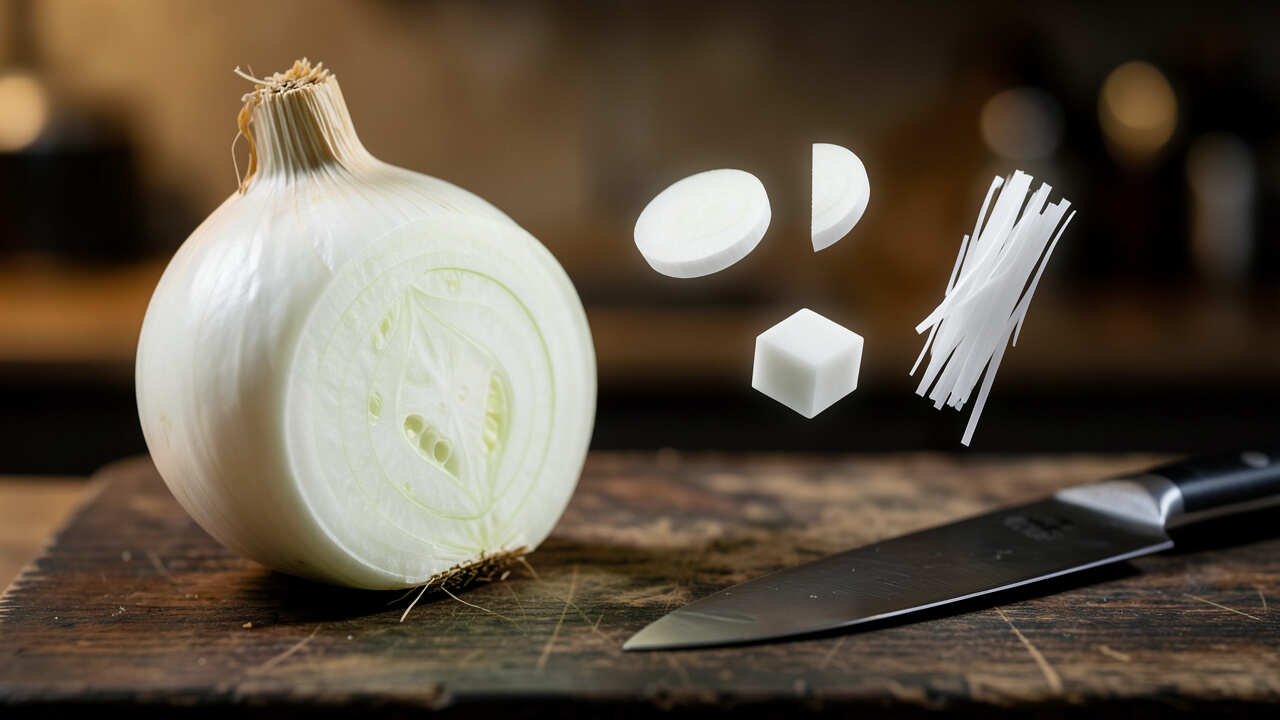
Half-Moon Slices: This is the easiest way to slice. After you’ve cut the onion in half from root to stem and peeled it, place it flat-side down. Cut across the onion, from root to stem.
The thickness of your slices depends on how far apart you make your cuts. Thinner slices cook faster and are good for sautés. Thicker slices hold their shape better and are great for grilling or caramelizing.
Rings: To get perfect rings, you need to cut the onion differently. Start with a whole, unpeeled onion. Cut off just the top stem end, but leave the root end intact.
Peel the onion. Now, slice the onion horizontally, from side to side, across its width. Each slice will give you a full ring.
The root end will help keep the rings together as you cut. This is a fun way to prepare onions for burgers or onion rings.
Knowing How to Cut an Onion (Every Style) means you can adapt to any recipe. Slices are perfect for adding a sweet onion flavor and texture to many dishes. They caramelize beautifully when cooked slowly.

The Art of Mincing an Onion
Mincing is for when you want onion flavor but almost no onion texture. This is ideal for delicate sauces, dressings, or dishes where you want the onion flavor to meld seamlessly. It’s like a very, very fine dice.
Start by dicing your onion as finely as possible using the method described earlier. Once you have your fine dice, you’ll repeat the slicing and chopping motion. Keep slicing and chopping the diced pieces until they are tiny.
You might need to use the tip of your knife to chop them smaller. It takes a bit more time and patience than dicing or slicing, but the result is worth it for certain recipes.
The goal is to get very small, almost paste-like pieces. This helps the onion flavor infuse quickly into whatever you’re cooking. Mastering this level of detail in How to Cut an Onion (Every Style) shows great knife skills.
Special Cuts and Techniques
Beyond the basic dice, slice, and mince, there are other useful ways to cut onions. These can add visual appeal and different textures to your food.
Juliene Cut
A julienne cut creates long, thin strips. It’s similar to slicing, but the strips are much narrower.
- Cut the onion in half from root to stem.
- Peel the onion and place it flat-side down.
- Make thin, vertical cuts from stem to root. Aim for strips about 1/8 inch thick.
This cut is great for salads, stir-fries, and garnishes where you want a delicate onion presence.
Wedges
Onion wedges are larger, triangular pieces. They are good for roasting or grilling where you want the onion to soften but not disappear.
- Cut the onion in half from root to stem.
- Peel the onion and place it flat-side down.
- Make cuts from the stem end towards the root, creating wedges. The size depends on how many wedges you want per half.
Wedges are easy to handle on skewers or in roasting pans.
Learning these different cuts expands your options for How to Cut an Onion (Every Style) and makes your cooking more versatile.

Tips for Tear-Free Onion Chopping
The biggest complaint people have about cutting onions is the tears. Onions release a gas when their cells are broken. This gas mixes with the moisture in your eyes to create sulfuric acid, which stings.
Here are some ways to minimize the tears:
- Chill the Onion: Put your onion in the refrigerator for 30 minutes before cutting. A cold onion releases less of the irritating gas.
- Use a Sharp Knife: As mentioned before, a sharp knife cuts cleanly through the cells, releasing less gas.
- Cut Under Ventilation: Chop your onion near an open window or under a range hood fan. This helps carry the gas away from your face.
- Cut the Root Last: The root end contains the highest concentration of the compounds that cause tearing. Try to cut it off at the very end of your chopping process.
- Wear Goggles: While it might look funny, swimming goggles or specialized onion goggles create a seal around your eyes and prevent the gas from reaching them.
- Breathe Through Your Mouth: Some people find that breathing through their mouth, with their tongue on the roof of their mouth, helps draw the irritants away from their eyes.
Finding the right method for you can make a huge difference in your experience. These tips are essential for anyone wanting to master How to Cut an Onion (Every Style) without the watery eyes.

Comparing Onion Cuts for Recipes
The style of onion cut you choose can significantly impact the final dish. Different cuts offer different textures, flavors, and cooking times. Here’s a quick look at when to use each type.
| Fine Dice | Sauces, soups, stews, mirepoix base | Melds into dishes, provides background flavor | Short to medium |
| Medium Dice | Chili, casseroles, most sautés | Noticeable texture, sweet flavor | Medium |
| Coarse Dice | Roasting, grilling, hearty stews | Substantial texture, sweet and savory | Longer |
| Half-Moon Slice | Fajitas, stir-fries, sautés, quick sautés | Distinct flavor, slightly chewy texture | Short to medium |
| Ring | Onion rings, burgers, garnishes | Crispy exterior, tender interior, sweet | Varies (frying, baking) |
| Julienne | Salads, Asian dishes, garnishes | Delicate texture, subtle flavor | Short |
| Wedge | Roasting, grilling, kebabs | Soft, sweet, caramelized | Longer |
| Mince | Dressings, marinades, raw applications, delicate sauces | Pure onion flavor, no texture | Very short (flavor infusion) |
Understanding these differences is key to mastering How to Cut an Onion (Every Style) for optimal results in your cooking.

Knife Skills for Efficient Onion Preparation
Good knife skills are the foundation for efficient and safe onion preparation. It’s not just about knowing the cuts; it’s about how you use your knife.
The Pinch Grip: This is the standard way to hold a chef’s knife. Pinch the base of the blade with your thumb and index finger. Wrap your other fingers around the handle.
This grip gives you the most control.
The Rocking Motion: When dicing or mincing, use a rocking motion with your knife. Keep the tip of the knife on the cutting board and lift the heel of the blade up and down. This creates a smooth, continuous cutting action.
Using Your Guiding Hand: Your non-knife hand is crucial. Keep your fingers tucked under in a “claw” shape. This protects your fingertips and guides the knife safely.
The knuckles of your guiding hand act as a guide for the blade, ensuring consistent cuts.
Practice Makes Perfect: Don’t get discouraged if your first few attempts aren’t perfect. Consistent practice is the best way to improve. The more you practice How to Cut an Onion (Every Style), the faster and more accurate you will become.
Frequently Asked Questions
Question: What is the best way to cut an onion for caramelizing?
Answer: For caramelizing, slicing onions into half-moons or thick rings is best. This allows them to cook slowly and evenly, developing a deep, sweet flavor without breaking down too much.
Question: How do I get perfectly uniform onion dice every time?
Answer: Achieving uniform dice involves making consistent horizontal and vertical cuts before chopping across. Ensure your knife is sharp and your guiding hand stays in the “claw” position to keep cuts even. The root end helps hold it together for consistency.
Question: Can I cut an onion without crying?
Answer: While completely tear-free cutting is difficult, chilling the onion, using a very sharp knife, and working near ventilation can significantly reduce tears. Specialized goggles are also an option for How to Cut an Onion (Every Style) tear-free.
Question: What’s the difference between dicing and mincing an onion?
Answer: Dicing creates small, distinct cubes of onion, while mincing results in extremely fine pieces, almost like a paste. Mincing is used when you want onion flavor without noticeable texture.
Question: Do I need to cut off the root end first?
Answer: It’s often best to leave the root end intact while cutting the onion. This helps hold the layers together, making slicing and dicing easier and safer. You can trim it off at the very end.
Question: Which onion type is best for cutting?
Answer: Yellow or white onions are typically used for general cutting and cooking as they have a good balance of flavor and sweetness. Red onions are great for salads and raw applications due to their milder flavor and color. Sweet onions are best for caramelizing.
Final Thoughts
Mastering How to Cut an Onion (Every Style) is a fundamental cooking skill that opens up a world of culinary possibilities. By understanding different cuts, practicing safe knife techniques, and using a few simple tricks to avoid tears, you can prepare onions perfectly for any dish. Enjoy the delicious results!