How To Use A Mandoline Safely
At a Glance Using a mandoline safely requires always using the hand guard, working on a stable surface, and keeping fingers away from the blade at all times. Selecting the right mandoline with adjusta…
Using a mandoline safely requires always using the hand guard, working on a stable surface, and keeping fingers away from the blade at all times. Selecting the right mandoline with adjustable thickness and a non-slip base, plus understanding blade types and proper slicing technique, prevents accidents. Consistent use of these safety steps yields uniform slices for even cooking and reduces the risk of injury in the kitchen.
Chopping vegetables can be a chore, and nobody wants an unexpected trip to the emergency room. Using a mandoline slicer can make prep work so much faster and give you beautiful, even slices every time. Learning How to Use a Mandoline Safely is key to enjoying these benefits without any cuts.
You’ll gain confidence in the kitchen and create restaurant-quality dishes with ease. Let’s get started on making your cooking safer and more enjoyable.
Key Takeaways
- Always use the hand guard provided with your mandoline.
- Keep your fingers away from the blade at all times.
- Work on a stable, flat surface to prevent slipping.
- Adjust the blade carefully and double-check settings before slicing.
- Understand the different blade types and their uses.
- Proper cleaning and storage are vital for safety and longevity.

Why Mandoline Safety Matters So Much
Mandoline slicers are fantastic tools. They can transform a pile of vegetables into perfectly uniform slices in seconds. This uniformity is great for cooking, as it ensures everything cooks at the same rate.
However, these tools have incredibly sharp blades. Because the blades are exposed and so sharp, accidents can happen very quickly. Learning How to Use a Mandoline Safely is not just about avoiding a minor cut; it’s about preventing serious injury.
Many home cooks have had close calls or know someone who has. The speed and efficiency of a mandoline can sometimes lead to a lapse in concentration. This is where understanding the proper techniques comes in.
When you know the right way to handle your mandoline, you can slice with confidence. You’ll be able to create beautiful dishes without the constant worry of a painful accident. Knowing How to Use a Mandoline Safely means you can focus on the joy of cooking.

Choosing the Right Mandoline and Accessories
Not all mandolines are created equal, and the accessories you use play a big role in safety. When you buy a mandoline, look for one that feels sturdy and well-made. A good mandoline will have a non-slip base or rubber feet to keep it from sliding on your counter.
This is a crucial first step in ensuring you know How to Use a Mandoline Safely.
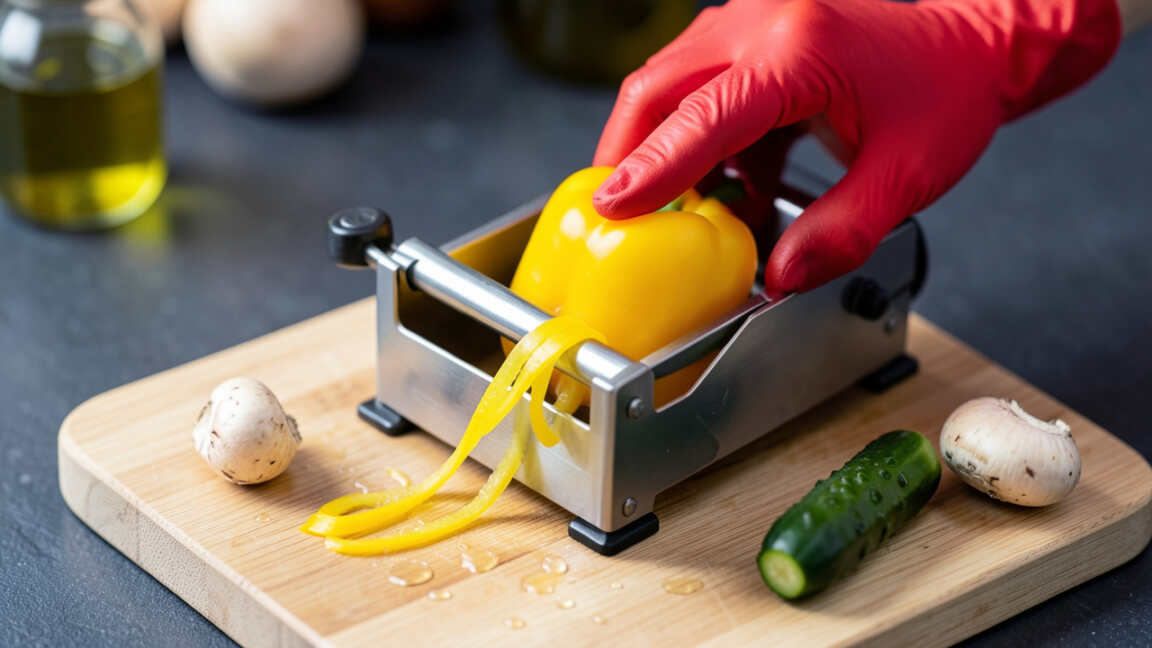
The most important safety accessory is the hand guard. This is usually a plastic piece that holds your food. It keeps your fingers a safe distance from the blade as you push the food through.
If your mandoline didn’t come with one, or if it’s flimsy, consider buying a separate, high-quality one. Some people also wear cut-resistant gloves. These can offer an extra layer of protection.
Think about the types of cuts you want to make. Mandolines come with different blades for slicing, julienning, and making waffle cuts. Ensure the blades are easy to change.
However, be extra careful when changing or cleaning blades. This is another point where understanding How to Use a Mandoline Safely is essential. Always handle blades with extreme care.

Setting Up Your Mandoline for Safe Slicing
Before you even think about slicing, you need to set up your mandoline correctly. This preparation is a vital part of learning How to Use a Mandoline Safely. The first thing to do is find a stable, flat surface.
Your kitchen counter is usually a good spot, but make sure it’s not wobbly. You might want to place a damp towel or a non-slip mat underneath the mandoline. This adds extra grip and prevents it from sliding while you work.
First, ensure the mandoline is clean and dry. Any grease or moisture can make it slippery. Next, attach the desired blade securely.
Make sure it clicks into place or is fastened according to the manufacturer’s instructions. If you’re using a mandoline with adjustable blades, set the thickness you want. Always double-check the setting before you start slicing.
A common mistake is to start slicing only to realize the thickness is wrong, leading to fumbling and potential danger.
Then, attach the hand guard to your food. This piece should hold the food firmly but not crush it. Position it so that your fingers are well above the level of the blade.
This is a non-negotiable step for anyone asking How to Use a Mandoline Safely. Never, ever slice without using the hand guard, no matter how small the piece of food or how experienced you are.

The Slicing Technique: Step-by-Step Guidance
Now that your mandoline is set up, it’s time to slice. This is where careful technique is most important for How to Use a Mandoline Safely. Hold the mandoline firmly with one hand.
Your other hand will guide the food using the hand guard.
First, place the food into the hand guard. Make sure it’s secure and you have a good grip. Second, position the hand guard at the top of the mandoline’s track.
Next, apply gentle, even pressure. Push the food down the track towards the blade. Use a smooth, consistent motion.
Don’t force it; let the sharp blade do the work.
Then, as you slice, keep your body and hands away from the blade’s path. Your focus should be on the movement of the food through the hand guard. As you get closer to the end of the food, you might need to adjust your grip on the hand guard slightly.
However, always maintain a safe distance. Finally, when you reach the end of the food, stop slicing. Do not try to slice the very last sliver without the hand guard.
It’s better to discard a small end piece than to risk a serious cut.
Understanding Different Blade Types and Cuts
Mandolines often come with multiple blades or settings to create different cuts. Understanding these can help you get the most out of your tool and also be aware of potential risks. Knowing How to Use a Mandoline Safely includes knowing what each blade is for.
The most common is the straight blade. This is for making thin or thick slices of vegetables like potatoes, cucumbers, and zucchini. Julienne blades are used to create thin, matchstick-like strips, perfect for salads or stir-fries.
Some mandolines have wavy or crinkle-cut blades for decorative slices. Others might have waffle blades for a unique texture.
When switching between blades, always unplug the mandoline if it has an electric component (though most are manual). If it’s a manual one, ensure the unit is stable and the blade is cool. Handle the blades by their edges, not the sharp cutting surface.
This attention to detail is part of knowing How to Use a Mandoline Safely.

Cleaning and Storing Your Mandoline
Proper cleaning and storage are just as critical for safety as the slicing itself. Neglecting these steps can lead to dull blades, making them harder to cut with and more dangerous. It also ensures you know How to Use a Mandoline Safely for the next time.
First, always clean your mandoline immediately after use. Food particles can dry and become difficult to remove. Second, use warm, soapy water.
A soft brush can help clean around the blades and crevices. Be extremely careful when washing the blades. Many mandolines come with a small brush specifically for this purpose.
Next, rinse thoroughly and dry all parts completely. Moisture can cause rust, especially on metal blades. Then, store the mandoline in a safe place.
The original packaging or a dedicated storage case is best. Ensure the blades are protected. Some mandolines have a safety lock or a cover for the blade.
If yours doesn’t, consider a blade cover to prevent accidental contact. Storing it in a drawer where it can slide around with other utensils is a recipe for disaster. Proper storage is a key component of How to Use a Mandoline Safely.

Dealing with Small Food Pieces
One of the trickiest parts of using a mandoline is when you’re left with small pieces of food. Trying to slice these without the hand guard is incredibly dangerous. This is where knowing How to Use a Mandoline Safely really comes into play.
First, recognize when a piece of food is too small to safely hold with the hand guard. If your fingers would be too close to the blade, stop. Second, do not try to force the small piece through.
This is a common cause of accidents.
Then, you have a few options. You can discard the small end piece. This is the safest choice.
Alternatively, you can use these smaller pieces for other cooking tasks. For example, small onion scraps can be added to stocks or soups. Small potato ends can be diced and added to a hash.
If you are making something like potato chips and want every slice, consider using a small, food-safe pusher tool if your mandoline came with one. However, be very cautious with any additional tools. The most important advice for How to Use a Mandoline Safely when dealing with small pieces is: when in doubt, don’t slice it.

Comparison: Mandoline vs. Knife Slicing
Many people wonder if a mandoline is truly necessary when they already have a sharp knife. While a knife is a fundamental tool, a mandoline offers distinct advantages, especially when focusing on consistency and speed. Understanding these differences can help you decide when to reach for your mandoline and how to use it effectively.
As you can see, the mandoline excels at producing perfect, even slices quickly. This is its main draw for many cooks. However, this speed and sharpness come with a greater potential for injury.
Therefore, mastering How to Use a Mandoline Safely is paramount. A chef’s knife offers more control for varied tasks but takes longer for uniform slicing.
Frequently Asked Questions
Question: What is the biggest danger when using a mandoline?
Answer: The biggest danger is accidentally slicing your fingers or hand. The blades are extremely sharp, and it’s easy to slip or lose concentration.
Question: Should I wear gloves when using a mandoline?
Answer: Wearing cut-resistant gloves is a good idea, especially if you’re new to using a mandoline or dealing with slippery foods. They add an extra layer of protection and are a key part of knowing How to Use a Mandoline Safely.
Question: How can I make sure my mandoline doesn’t slip?
Answer: Always place your mandoline on a stable, flat surface. Use a damp cloth or a non-slip mat underneath it for extra grip. Ensure the mandoline’s own rubber feet are in good condition.
Question: Is it okay to use a mandoline for very small pieces of food?
Answer: No, it’s generally not safe. If a piece of food is too small to hold securely with the hand guard without your fingers getting close to the blade, it’s best to stop slicing that piece.
Question: How often should I sharpen my mandoline blade?
Answer: Mandoline blades don’t need sharpening as often as kitchen knives. However, if you notice it’s becoming dull or requires more force to slice, it might be time to replace it or have it professionally sharpened. A dull blade can be more dangerous.
Question: What is the best way to clean a mandoline blade?
Answer: Use warm, soapy water and a soft brush. Always be extremely careful and handle the blade by its edges, away from the sharp cutting surface. Dry it completely after rinsing.
Final Thoughts
Mastering How to Use a Mandoline Safely transforms a potentially risky tool into a kitchen asset. Always use the hand guard, work on a stable surface, and handle the sharp blades with respect. By following these steps, you can enjoy perfect, uniform slices for all your dishes with confidence and peace of mind.