How To Crack Eggs Cleanly
At a Glance Cracking eggs cleanly requires using a flat surface like a countertop rather than a bowl edge to minimize shell fragments and messy spills. A precise two-step technique—a single sharp tap…
Cracking eggs cleanly requires using a flat surface like a countertop rather than a bowl edge to minimize shell fragments and messy spills. A precise two-step technique—a single sharp tap to create a crack followed by gentle thumbs-apart opening—keeps shell pieces out of your mixture. Mastering this simple skill reduces waste, saves cleanup time, and ensures professional results in any recipe.
Getting eggs ready for cooking shouldn’t be a messy chore. Learning How to Crack Eggs Cleanly makes a big difference in the kitchen. It means fewer bits of shell in your food and less cleanup later.
You’ll find cooking feels smoother and more enjoyable when you know this simple skill. We’ll show you the best ways to get perfect eggs, every time, so you can focus on making delicious meals.
Key Takeaways
- Learn the best surfaces to crack eggs on for minimal mess.
- Discover techniques to avoid shell fragments in your recipes.
- Understand how to handle different types of eggs for clean cracking.
- Find out why proper egg cracking saves time and reduces waste.
- Gain confidence in your cooking skills with this fundamental technique.

Why Cracking Eggs Cleanly Matters
Many people think cracking eggs is just a simple task. However, doing it right makes a big impact on your cooking. When you crack eggs cleanly, you avoid getting tiny shell pieces in your batter or sauces.
This saves you the frustrating job of picking them out later. It also keeps your cooking looking and tasting professional. Mastering How to Crack Eggs Cleanly is a small step that leads to better results in the kitchen.
Think about baking a cake. A little bit of shell can ruin the smooth texture. Or imagine making a delicate custard.
Shell bits can be very noticeable. Learning How to Crack Eggs Cleanly helps prevent these issues. It also makes your cooking process more efficient.
Less time spent on cleanup means more time enjoying your food or moving on to the next step.

Choosing the Right Surface to Crack Eggs
The surface you choose for cracking eggs is very important. Some surfaces are better than others for getting a clean break. This simple choice can prevent shell fragments from getting into your egg.
It also helps keep your hands cleaner.
The Best Surfaces
The most recommended surface for cracking eggs is a flat, hard surface. This could be your kitchen counter or a sturdy cutting board. When you crack an egg on a flat surface, it creates a clean break.
This break is usually right in the middle of the eggshell. This makes it easier to open the shell without crushing it.
Surfaces to Avoid
You should avoid cracking eggs on the edge of a bowl or pan. When you hit the egg on a sharp edge, it tends to shatter the shell. This often sends small pieces of shell flying.
It can also push shell fragments directly into the egg. This is one of the main reasons people struggle with How to Crack Eggs Cleanly.

Mastering the Technique: Step-by-Step Guide
Knowing the right surface is one thing. Knowing how to actually do it is another. Follow these steps to learn How to Crack Eggs Cleanly every single time.
This method is simple and effective for most cooks.
Step 1: Get Ready
First, make sure your hands are clean and dry. Hold the egg gently but firmly in one hand. You want a good grip so the egg doesn’t slip.
Have a bowl or your cooking pot ready nearby.
Step 2: The Crack
Second, find a flat spot on the egg. Aim for the middle of the egg, not the pointy end. Give the egg a firm, quick tap on your flat surface.
You want to create a single, clean crack. Don’t hit it too hard, or it will break too much. A medium tap is usually perfect.
Step 3: Open the Shell
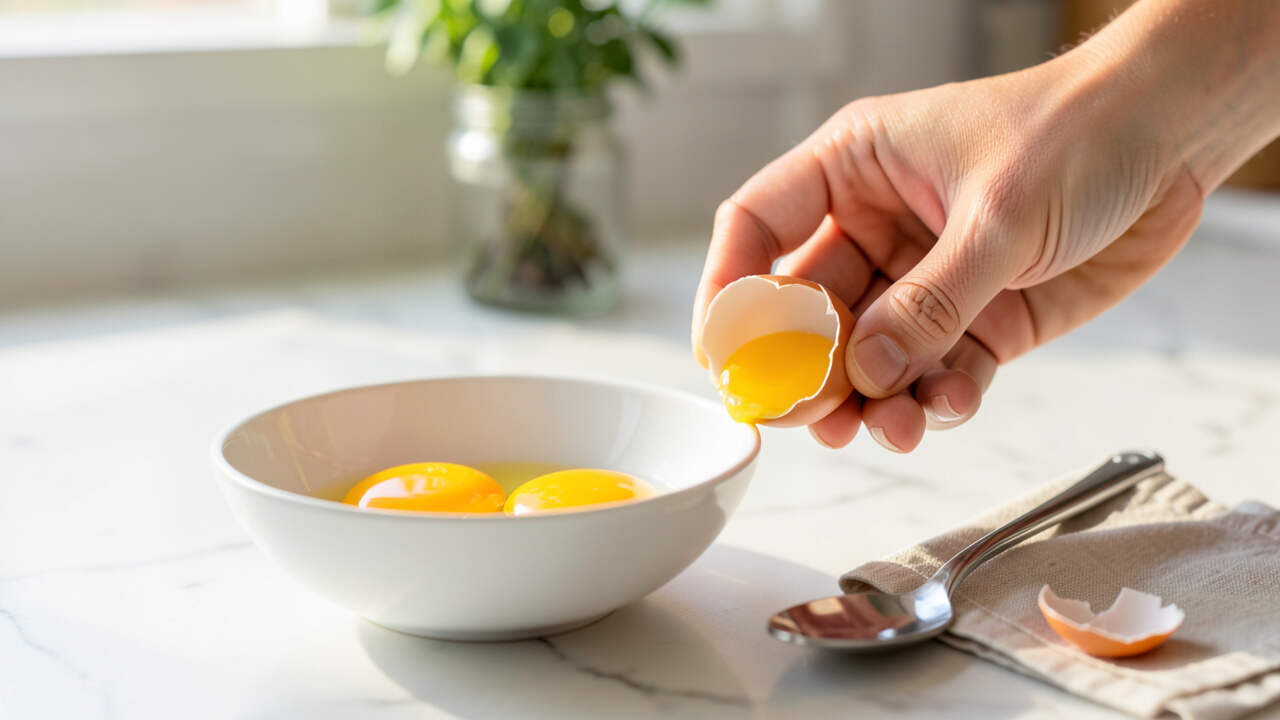
Next, hold the cracked egg over your bowl. Place your thumbs on either side of the crack. Gently pull the two halves of the shell apart.
Let the egg white and yolk slide into the bowl. The shell should open up nicely.
Step 4: Check for Shells
Then, look closely at the egg you just cracked. Check the yolk and white for any small pieces of shell. If you see any, use the larger half of the eggshell to scoop them out.
The curved edge of the shell is great for this.
Step 5: Repeat and Refine
Finally, repeat the process for any other eggs you need. With practice, you’ll get a feel for the right amount of force. You’ll quickly learn How to Crack Eggs Cleanly without even thinking about it.

Dealing with Different Egg Types
Eggs come in various sizes and even colors. While the basic technique for How to Crack Eggs Cleanly stays the same, there are a few things to keep in mind for different types of eggs.
Large vs. Small Eggs
Larger eggs might need a slightly firmer tap than smaller ones. Smaller eggs, like quail eggs, are much more delicate. You’ll need a very gentle touch for those.
However, the principle of cracking on a flat surface still applies. This is key to learning How to Crack Eggs Cleanly regardless of size.
Brown vs. White Eggs
The color of the eggshell doesn’t change how you crack it. Brown eggs and white eggs have similar shell thickness. The main difference is the hen that laid them.
So, use the same flat-surface technique for both brown and white eggs.
Organic and Free-Range Eggs
Eggs from organic or free-range hens are often the same as regular eggs in terms of shell. Their quality might be different, but How to Crack Eggs Cleanly remains a consistent skill. Always use the flat surface method.
Common Problems and How to Fix Them
Even with the best advice, sometimes things don’t go perfectly. Here are some common issues people face when trying to crack eggs cleanly and how to solve them.
Problem: Shell Fragments in the Egg
This is the most frequent problem. If you get a small piece of shell in your egg, don’t panic. The best tool to remove it is actually another piece of the eggshell.
Use the curved edge of the larger shell piece to gently scoop out the fragment. The shell attracts the shell piece, making it easy to lift out.
Problem: Egg Yolk Breaks
Sometimes, the yolk breaks before it even gets into the bowl. This usually happens if you tap the egg too hard or too close to the end. It can also happen if you try to pry the shell open too roughly.
Try to be gentler. If the yolk breaks, it’s still usable for many recipes, but it won’t be ideal for dishes where you need whole yolks.
Problem: Egg Cracks Unevenly
If the crack isn’t clean and neat, it can be harder to open. This often happens when cracking on the edge of a bowl. Stick to the flat surface.
If it cracks unevenly, try to insert your thumbs into the crack as smoothly as possible to open it. You might need to be a bit more careful to avoid shell pieces.

Benefits of Mastering Egg Cracking
Becoming good at How to Crack Eggs Cleanly offers more than just a less messy kitchen. There are several advantages that make this skill worthwhile.
Reduced Food Waste
When you crack eggs cleanly, you are less likely to lose any of the egg white or yolk. This means you use the whole egg as intended. It helps prevent waste, which is good for your wallet and the environment.
Every bit of egg counts, especially in baking where precise measurements are key.
Improved Cooking Presentation
No one wants to see shell fragments in their food. Cleanly cracked eggs ensure your dishes look perfect. This is especially important when making recipes that are visually appealing, like meringues or poached eggs.
A clean presentation makes your food more appetizing.
Increased Confidence in the Kitchen
Knowing you can perform even simple tasks perfectly can boost your confidence. Mastering How to Crack Eggs Cleanly is a small win that builds up your cooking skills. It makes you feel more capable and ready to tackle more complex recipes.
Saving Time on Cleanup
Less shell in your food means less time spent fishing it out. It also means fewer drips and spills on your counters and stovetop. This translates to quicker cleanup after cooking.
You can get back to enjoying your meal or relaxing sooner.

Tips for Cracking Eggs for Specific Recipes
Some recipes require a bit more care when cracking eggs. Knowing how to adapt your technique can be very helpful.
For Baking
Baking often requires very precise amounts of egg. Using the flat-surface method is crucial to avoid shell pieces. If a recipe calls for separated eggs, crack each egg into a small separate bowl first.
This way, if one egg has a problem, it doesn’t ruin the rest. This is a smart way to ensure How to Crack Eggs Cleanly for delicate baking.
For Scrambled Eggs or Omelets
For scrambled eggs or omelets, a few tiny shell fragments might not be a disaster. However, it’s still best practice to crack them cleanly. If a small piece does get in, you can often scoop it out with the shell.
If not, you can use a spoon or your finger.
For Poached or Fried Eggs
When poaching or frying eggs, you want the yolk to stay intact. Cracking the egg directly into a small bowl first, then gently sliding it into the pan or water, is a good method. This gives you a chance to check for shells and ensures the yolk doesn’t break during the transfer.
This is a great tip for learning How to Crack Eggs Cleanly for presentation.

When to Use an Egg Cracker Tool
While hand-cracking is usually best, some people wonder about egg cracker tools. These gadgets are designed to help crack eggs, but they aren’t always necessary.
Pros of Egg Cracker Tools
Some tools can help people with limited hand strength or dexterity. They might offer a more consistent crack for some users. They can also be less messy for some individuals, reducing the chance of shell fragments.
However, they don’t always guarantee How to Crack Eggs Cleanly better than the manual method.
Cons of Egg Cracker Tools
Many tools can be difficult to clean. They might also be more expensive than just using your hands. For most people, mastering the simple hand-cracking technique is more efficient and practical.
The goal is always How to Crack Eggs Cleanly with minimal fuss.
Frequently Asked Questions
Question: What is the best way to learn How to Crack Eggs Cleanly?
Answer: The best way is to practice cracking eggs on a flat surface, like a counter, rather than the edge of a bowl. This creates a cleaner break and fewer shell fragments.
Question: How do I remove shell fragments if I accidentally get them in my egg?
Answer: Use the larger half of the cracked eggshell to gently scoop out any shell pieces. The shell naturally attracts other shell fragments.
Question: Does the color of the egg matter for cracking?
Answer: No, the color of the eggshell (brown or white) does not affect how you should crack it. The technique for How to Crack Eggs Cleanly is the same for all egg colors.
Question: Why is cracking eggs on the edge of a bowl a bad idea?
Answer: Cracking on an edge tends to shatter the shell, pushing small pieces into the egg and making it harder to open cleanly. A flat surface is much better for How to Crack Eggs Cleanly.
Question: Can I teach my kids How to Crack Eggs Cleanly?
Answer: Yes, this is a great skill to teach children. Start with them practicing on a flat surface with adult supervision to ensure they learn the proper technique and stay safe.
Final Thoughts
Learning How to Crack Eggs Cleanly is a simple skill that greatly improves your cooking. By using a flat surface and a gentle tap, you can avoid shell bits and messy spills. This makes cooking more enjoyable and your dishes look better.
You’ve learned practical tips to make egg preparation easy.