How To Clean Burnt Pans (Every Material)
At a Glance To clean burnt pans of any material, use material-specific methods such as baking soda and vinegar for stainless steel, salt scrubbing for cast iron, gentle deglazing for nonstick, and lem…
To clean burnt pans of any material, use material-specific methods such as baking soda and vinegar for stainless steel, salt scrubbing for cast iron, gentle deglazing for nonstick, and lemon and salt for copper. This approach restores performance without damaging the cookware's surface. Natural household items effectively remove even tough baked-on messes, and preventive steps like proper preheating reduce future burning.
Dealing with burnt food stuck to your pots and pans can be really frustrating. It’s not just about how it looks; burnt-on messes can affect how your pans cook next time and even make them harder to use. Getting this right means you can save your favorite cookware and keep it working like new for longer.
We’ll walk you through How to Clean Burnt Pans (Every Material), so you can get back to enjoying your cooking without the worry of stubborn stains. Follow these simple steps, and you’ll see your pans shine again.
Key Takeaways
- Understand gentle methods for cleaning burnt pans to preserve their surface.
- Learn specific cleaning techniques for common pan materials like stainless steel, cast iron, nonstick, and copper.
- Discover natural cleaning solutions using everyday household items.
- Find out how to tackle tough, baked-on messes effectively.
- Get tips on preventing future burnt-on food.

Reviving Stainless Steel Pans
Stainless steel is a popular choice for cookware. It’s tough and looks great. But even stainless steel can get burnt-on food.
When this happens, don’t panic. There are simple ways to bring your pans back to life.
For light burns, start with hot, soapy water. Use a soft sponge or cloth. Avoid abrasive scrubbers that can scratch the surface.
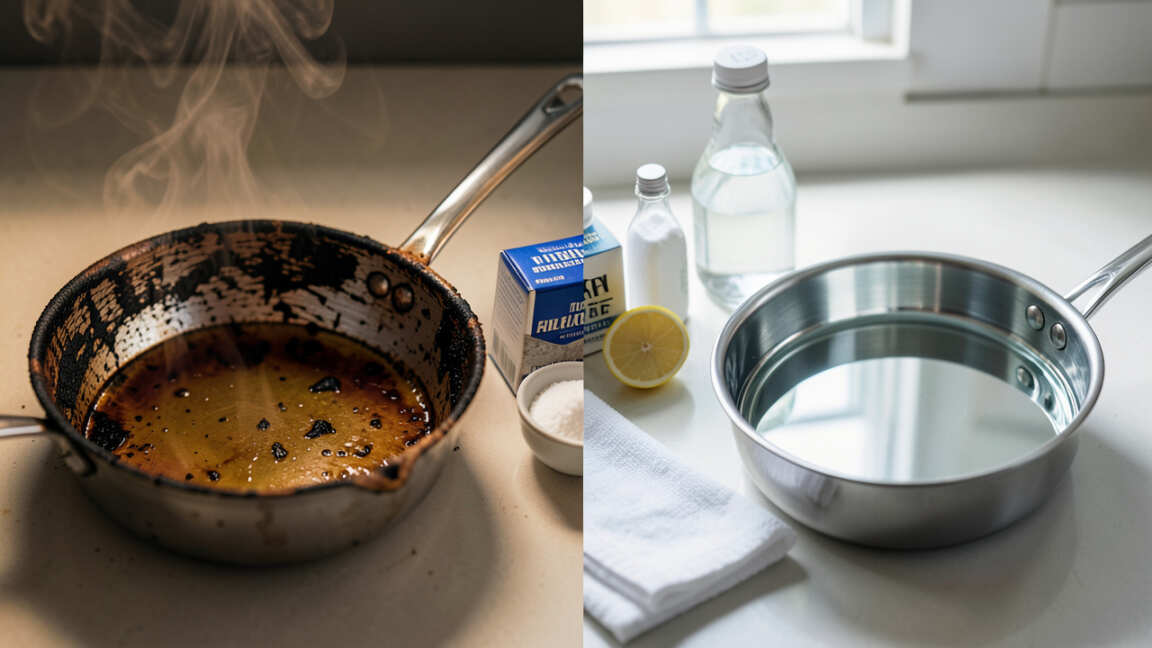
If that doesn’t work, try a paste made from baking soda and water. Apply it to the burnt area. Let it sit for about 15-30 minutes.
Then, gently scrub with a non-abrasive sponge. Rinse well and dry.
A stronger option is to use vinegar. Pour a small amount of white vinegar into the pan. Heat it gently on the stove.
Let it simmer for a few minutes. The acidity of the vinegar helps loosen burnt bits. Be careful not to let it boil dry.
After simmering, let the pan cool slightly. Then, use a spatula or scraper to lift the burnt residue. Wash as usual with soap and water.
For really stubborn stains on stainless steel, you can use a specialized stainless steel cleaner. Always follow the product instructions carefully. Test any cleaner on a small, inconspicuous area first.
Proper cleaning is key to How to Clean Burnt Pans (Every Material) effectively.

Caring for Cast Iron Cookware
Cast iron pans are workhorses in the kitchen. They are known for their durability and even heating. Cleaning burnt cast iron requires a slightly different approach.
The goal is to remove burnt food without stripping the pan’s seasoning.
First, try scraping out loose bits with a wooden spoon or spatula. For stuck-on food, you can use coarse salt. Pour a generous amount of salt into the pan.
Add a little bit of water to make a gritty paste. Use a stiff brush or a crumpled paper towel to scrub the burnt areas. The salt acts as a gentle abrasive.
Rinse the pan thoroughly with hot water.
Never use harsh soaps or detergents on seasoned cast iron. These can break down the protective layer. If you must use soap, use a very small amount and rinse immediately.
After cleaning, it’s crucial to dry your cast iron pan completely. Place it on a low heat burner for a few minutes. This ensures all moisture is gone.
Next, apply a thin layer of cooking oil to the inside and outside of the pan. Wipe away any excess oil. This re-seasoning step helps maintain the non-stick surface.
If the seasoning is damaged, you might need to re-season the entire pan in the oven. Learning How to Clean Burnt Pans (Every Material), especially cast iron, protects your investment.

Restoring Nonstick Pans
Nonstick pans make cooking and cleanup easy. However, burnt food can be a challenge for their delicate surfaces. It’s important to clean them gently to avoid damaging the nonstick coating.
Start by letting the pan cool completely. Never plunge a hot nonstick pan into cold water. This can warp it and damage the coating.
Once cool, try to gently scrape away any loose burnt food with a soft spatula or a silicone scraper. Avoid metal utensils at all costs.
For stuck-on bits, fill the pan with warm water. Add a drop of mild dish soap. Let it soak for at least an hour or even overnight.
After soaking, try to gently scrub the burnt areas with a soft sponge or cloth. Rinse thoroughly. If some residue remains, you can try a baking soda paste.
Mix baking soda with water to form a paste. Apply it to the burnt spots and let it sit for about 30 minutes. Gently scrub and rinse.
Boiling water with a bit of vinegar can also help. Pour about an inch of water into the pan. Add a tablespoon of white vinegar.
Bring it to a simmer for a few minutes. Let it cool. Then, gently clean with a soft sponge.
Always ensure you’re following the manufacturer’s care instructions to ensure your nonstick pans last. This is a key part of knowing How to Clean Burnt Pans (Every Material).

Shining Up Copper Cookware
Copper pans are beautiful and conduct heat exceptionally well. However, they can be prone to tarnishing and burnt-on food. Cleaning copper requires care to maintain its luster and functionality.
For burnt food, begin with warm, soapy water and a soft sponge. If the food is stubborn, you can try boiling water in the pan with a tablespoon of baking soda. Let it simmer for a few minutes, then let it cool.
Gently scrape away the residue with a non-metal utensil. Rinse well and dry immediately to prevent water spots.
To remove tarnish and restore shine, natural remedies work best. A mixture of lemon juice and salt is very effective. Cut a lemon in half.
Dip the cut side into salt. Rub the salted lemon directly onto the copper surface. The acidity of the lemon and the abrasiveness of the salt will lift tarnish and burnt residue.
For more stubborn spots, you can make a paste of lemon juice and salt. Apply it and let it sit for a few minutes before gently rubbing.
Another effective cleaner is a paste of vinegar and flour. Mix equal parts white vinegar and flour to create a paste. Apply this paste to the copper.
Let it sit for about 10-15 minutes. Then, gently rub the surface with a soft cloth. Rinse thoroughly with warm water and buff dry with a soft cloth.
Proper cleaning ensures your copper pans remain functional and attractive. This knowledge is vital for How to Clean Burnt Pans (Every Material).

Tackling Tough Baked-On Messes
Sometimes, burnt-on food is incredibly stubborn. It seems like nothing will budge it. Don’t give up just yet.
There are methods to tackle even the toughest messes.
For many pan materials, a combination of heat and a mild acid can work wonders. Try boiling water with a generous amount of vinegar or lemon juice. Let it simmer for 10-15 minutes.
This process loosens the burnt particles. Allow the pan to cool. Then, use a wooden spoon or plastic scraper to gently lift the burnt bits.
You might need to repeat this process for very tough stains.
Baking soda is another powerful ally. For a super-strength paste, mix baking soda with a little bit of water or dish soap. Apply this thick paste to the burnt areas.
Let it sit for several hours, or even overnight. The baking soda will absorb moisture and break down the burnt residue. In the morning, scrub with a non-abrasive sponge or cloth.
Rinse thoroughly.
Oven cleaner can be a last resort for some materials, but use it with extreme caution. It’s very harsh. Always check your pan’s manufacturer instructions.
Some materials, like nonstick or anodized aluminum, can be damaged by oven cleaner. If you use it, ensure good ventilation and wear gloves. This is part of understanding How to Clean Burnt Pans (Every Material), especially when facing a difficult situation.

Preventing Burnt Food in the Future
The best way to deal with burnt pans is to avoid the mess in the first place. A few simple habits can make a big difference.
Always pay attention while cooking. Don’t walk away from the stove when food is cooking, especially if it’s prone to burning like sugar or dairy. Use medium heat whenever possible.
High heat can cause food to burn quickly, even if you’re watching it.
Make sure your pans are properly heated before adding oil. If the oil shimmers, it’s usually ready. Too cold, and food sticks.
Too hot, and it burns. Stir food frequently, especially sauces and caramelizing ingredients. Use the right amount of cooking fat.
A little oil or butter can prevent sticking and burning.
For delicate items, consider using parchment paper or a splatter screen. These tools can help manage heat and prevent food from sticking or splattering. Cleaning pans immediately after use is also helpful.
If food residue is still warm and soft, it’s much easier to remove than when it’s dried and hardened. Following these tips will make How to Clean Burnt Pans (Every Material) a less frequent task.
Frequently Asked Questions
Question: What is the easiest way to clean a burnt stainless steel pan?
Answer: For burnt stainless steel, try boiling water with a tablespoon of baking soda or vinegar. Let it simmer for a few minutes, then cool and gently scrub with a non-abrasive sponge. This often loosens burnt bits effectively.
Question: Can I use steel wool on my burnt pans?
Answer: Generally, avoid steel wool on most pans, especially nonstick, copper, and anodized aluminum. It can scratch and damage the surface. For stainless steel or cast iron, use it very gently as a last resort and test first.
Question: How do I know if my nonstick pan coating is ruined?
Answer: If your nonstick pan coating is peeling, flaking, or has deep scratches, it’s likely ruined. Burnt-on food that won’t come off with gentle cleaning might also indicate damage. It’s time for a replacement.
Question: Is it safe to use baking soda on all pan materials?
Answer: Baking soda is a mild abrasive and generally safe for most pan materials, including stainless steel, cast iron, and copper. However, use it gently and test in an inconspicuous area on delicate surfaces.
Question: How often should I season my cast iron pan after cleaning burnt food?
Answer: After cleaning burnt food from cast iron and drying it thoroughly, it’s always a good idea to apply a thin layer of oil and heat it gently. This re-seasoning step helps maintain the pan’s protective layer and prevents future sticking.
Question: What if the burnt food is completely stuck and won’t budge?
Answer: For extremely stubborn burnt food, you might need to soak the pan overnight in hot, soapy water. If that doesn’t work, try a baking soda paste left on for several hours, or a gentle simmer with vinegar. Patience is key for tough jobs when learning How to Clean Burnt Pans (Every Material).

Final Thoughts
Keeping your pots and pans clean is simple with the right methods. By using gentle techniques and understanding your pan’s material, you can easily remove burnt-on food. This saves your cookware and ensures it performs well for many meals to come.