How To Store Onions, Garlic, And Potatoes Properly
At a Glance Proper storage of onions, garlic, and potatoes requires cool, dark, and well-ventilated conditions to prevent spoilage, sprouting, and green skin. Onions and garlic should be kept away fro…
Proper storage of onions, garlic, and potatoes requires cool, dark, and well-ventilated conditions to prevent spoilage, sprouting, and green skin. Onions and garlic should be kept away from potatoes because the gases each release accelerate rotting and sprouting. Avoid storing these vegetables in the refrigerator or near heat sources, as moisture and temperature fluctuations cause premature decay and flavor loss.
Keeping your onions, garlic, and potatoes fresh and tasty for longer is easier than you might think. Proper storage makes a big difference, saving you money and ensuring you always have these kitchen staples ready for your next meal. When you know How to Store Onions, Garlic, and Potatoes Properly, you avoid spoilage, wasted food, and that disappointing moment when you reach for an ingredient only to find it’s gone bad.
This guide will show you simple, effective ways to extend their shelf life so you can enjoy them at their best.
Key Takeaways
- Understand the ideal storage conditions for onions to prevent sprouting and rotting.
- Learn the best ways to store garlic to maintain its flavor and prevent mold.
- Discover how to keep potatoes from sprouting and turning green for maximum freshness.
- Identify common mistakes to avoid when storing these root vegetables and alliums.
- Gain practical tips for organizing your pantry or cellar for optimal produce preservation.
Keep Onions Firm and Flavorful Longer
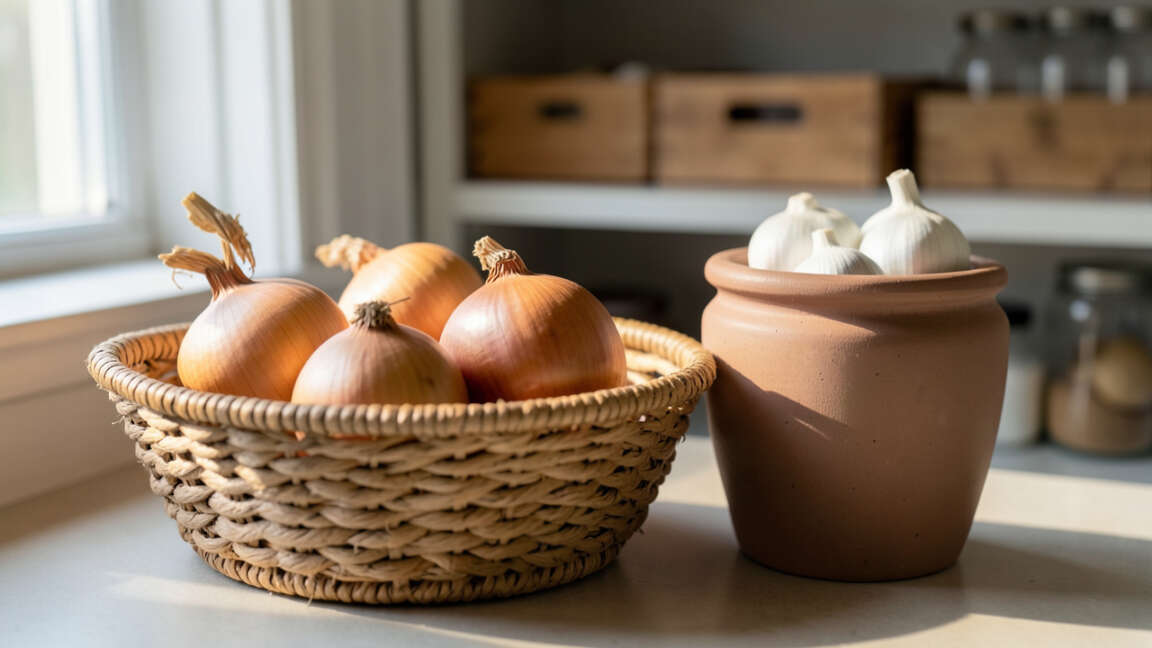
Onions are a staple in many kitchens. Knowing how to store them correctly means you won’t have to toss out soft or sprouted bulbs. It’s all about giving them the right environment.
This prevents them from going bad too quickly.
The Best Places for Onion Storage
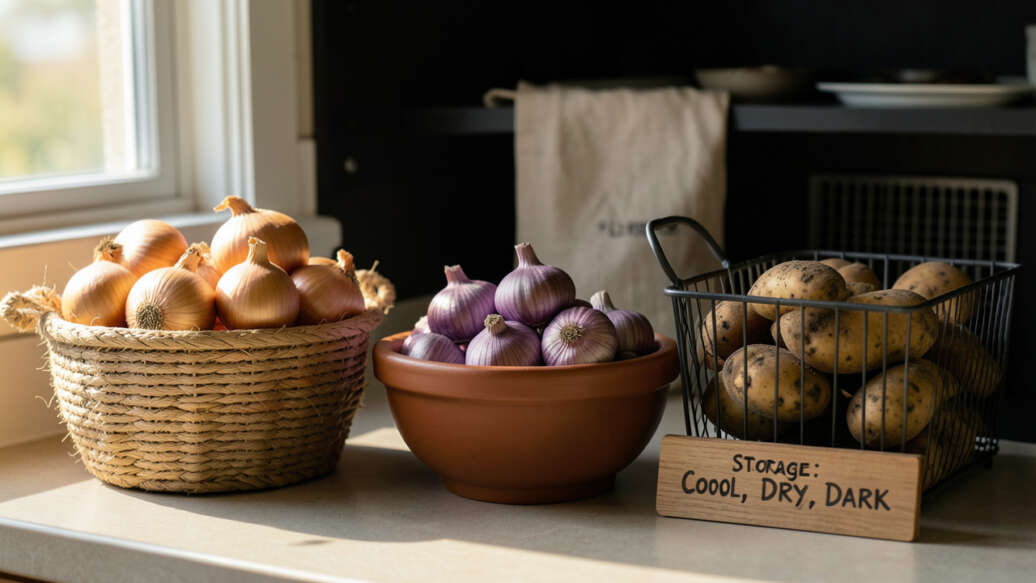
Onions need a few things to stay fresh. They like cool, dry, and dark places. A pantry, a cool cupboard, or a basement works well.
Avoid storing them in plastic bags. This traps moisture and makes them rot faster.
Good airflow is key for onions. If you have a mesh bag or a basket, that’s perfect. This lets air circulate around them.
This helps them stay dry and firm.
What Onions Don’t Like
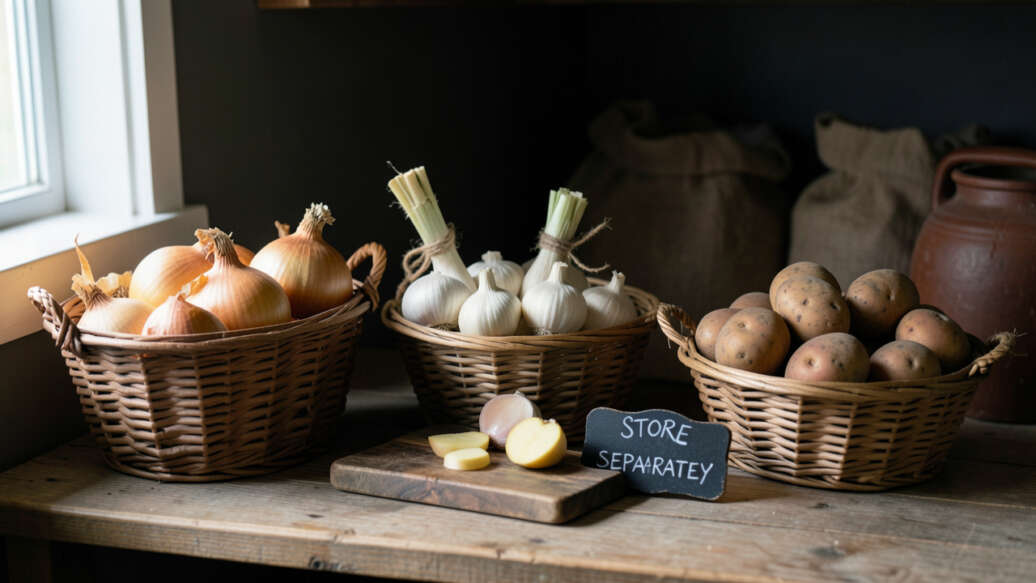
Don’t store onions near potatoes. Potatoes release moisture and ethylene gas. This gas can make onions sprout and go bad quicker.
It’s a common mistake that many people make. Keep them separate for the best results.
Also, avoid storing cut onions at room temperature. Once cut, onions should be wrapped tightly and kept in the refrigerator. They’ll last about a week this way.
But whole onions are best stored outside the fridge.
Common Onion Storage Mistakes
Putting onions in the refrigerator is often a mistake for whole onions. The cold, humid air can make them soft. It can also change their taste.
So, unless they are cut, keep them out.
Another mistake is storing them in plastic bags. This traps moisture and leads to mold. Onions need to breathe.
Use breathable containers like mesh bags or paper bags with holes.
Garlic’s Secret to Lasting Freshness
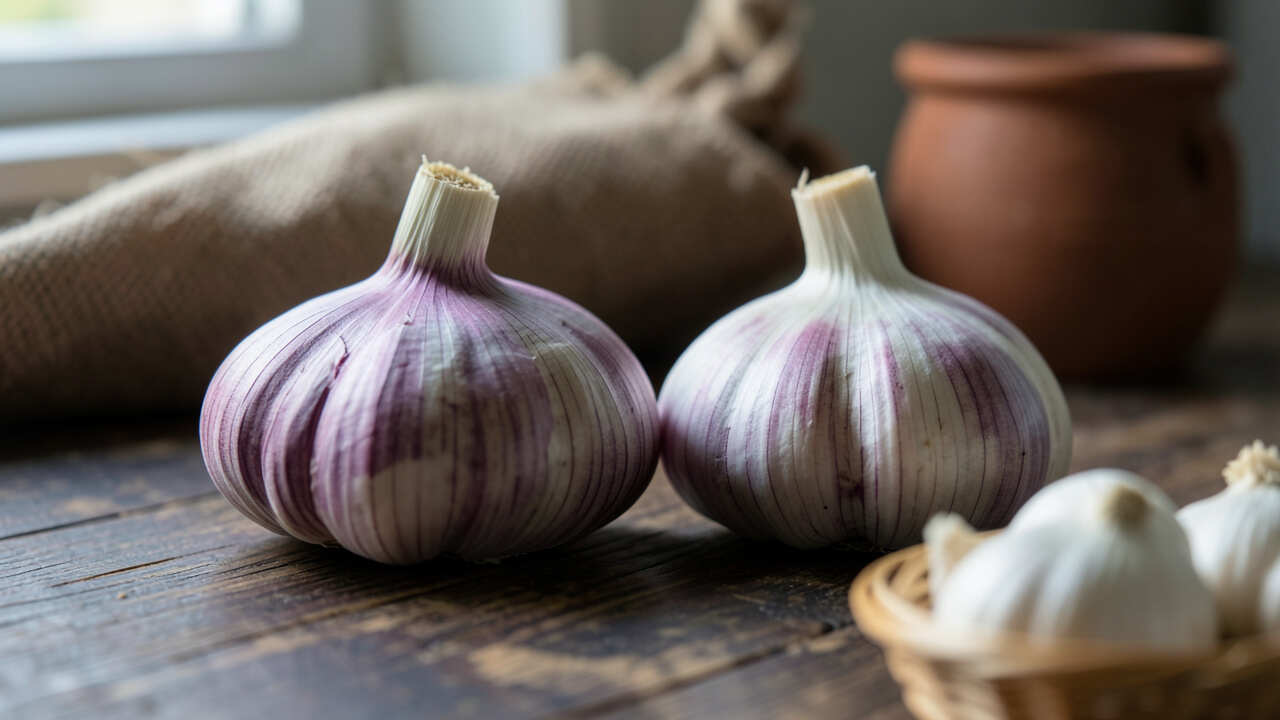
Garlic adds so much flavor to cooking. To get the most out of your garlic, proper storage is important. It helps keep the cloves firm and potent.
Where to Keep Your Garlic
Garlic loves a cool, dry place. A pantry or a dark cupboard is ideal. Think of it like storing onions, but even more important for garlic to be dry.
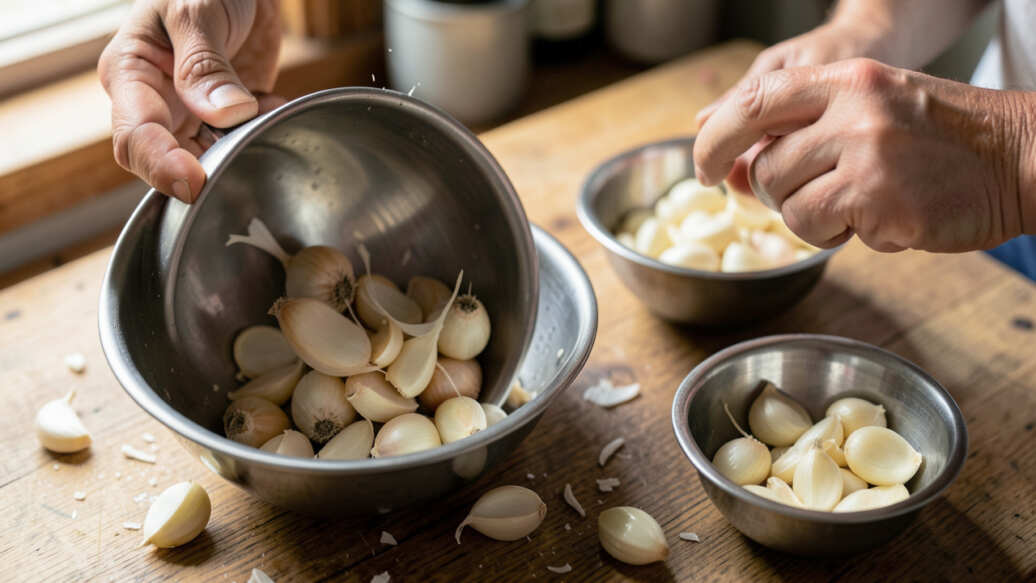
Keep garlic bulbs whole until you need them. Once you peel or chop garlic, it loses its protective shell. This makes it spoil much faster.
Garlic Storage Best Practices
A ceramic garlic keeper with holes is a great option. It keeps garlic in the dark and allows for good airflow. If you don’t have one, any breathable container will do.
A paper bag or a loosely woven basket works too.
Avoid storing garlic in the refrigerator. The cold, damp air can cause it to sprout. It can also make the cloves turn soft and mushy.
For whole bulbs, the fridge is not the place.
Storing Peeled or Chopped Garlic
Once you’ve peeled or chopped garlic, its lifespan changes. Store it in an airtight container in the refrigerator. It will stay good for about 7 to 10 days.
Some people even freeze minced garlic in oil.
Freezing is another option for longer storage. You can freeze whole cloves or minced garlic. It’s best to freeze garlic in small portions.
This way, you only thaw what you need.
Potatoes: Preventing Sprouting and Green Skin
Potatoes are a versatile food. To ensure they are always ready for use, knowing How to Store Onions, Garlic, and Potatoes Properly is essential. Potatoes can sprout and turn green if not stored correctly.
This can make them unappetizing and sometimes unsafe.
The Ideal Spot for Potatoes
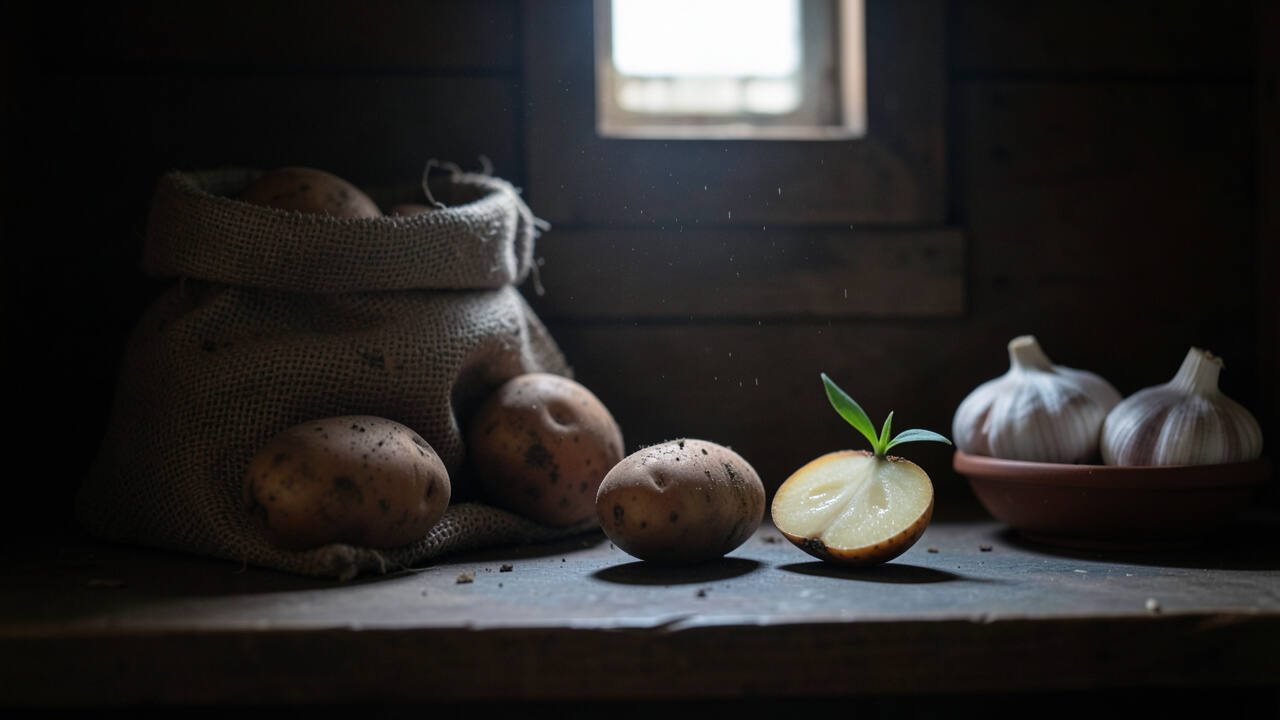
Potatoes thrive in cool, dark, and dry places. A basement or a root cellar is perfect. If you don’t have those, a cool, dark cupboard away from heat sources works too.
Think of a place with good ventilation.
Avoid storing potatoes in the refrigerator. The cold temperature converts their starch to sugar. This can make them taste a bit sweet and turn them brown when cooked.
It also changes their texture.
Ensuring Proper Potato Airflow
Like onions, potatoes need to breathe. Store them in a breathable container. Burlap sacks, paper bags, or baskets are good choices.
Avoid plastic bags, as they trap moisture and can cause rot.
If you buy potatoes in a mesh bag, that’s usually fine. Just make sure the bag is kept in a dark place. Light exposure is a big no-no for potatoes.
Why Potatoes Turn Green
Potatoes turn green when they are exposed to light. This green color is called solanine. It’s a natural toxin that can cause stomach upset.
If your potatoes have a small green spot, you can cut it away. If a large part is green, it’s best to discard the potato.
To prevent this, always store potatoes in a dark place. Keep them away from windows or under bright kitchen lights. This is a crucial part of How to Store Onions, Garlic, and Potatoes Properly.
When to Discard Sprouted Potatoes
A few sprouts on a potato are usually okay. You can simply snap them off before cooking. However, if the potato is soft, shriveled, or has many long sprouts, it’s time to let it go.
The nutrients have been used up by the sprouts.
Also, if the potato has a strong, unpleasant odor, it has likely gone bad. Trust your senses – if it looks or smells off, it’s best not to eat it.
Comparing Storage Methods: A Quick Look
Different vegetables have different needs. Understanding these differences helps you store them correctly. This ensures they last longer and stay fresh.
This table highlights the key differences. For example, while onions and potatoes share similar ideal temperatures and storage needs, garlic prefers a slightly warmer but still cool environment. The main takeaway is that light, moisture, and proximity to other produce are common enemies for all three.
Maximizing Your Storage Space and Efficiency
Once you know the basics of How to Store Onions, Garlic, and Potatoes Properly, you can think about how to make the most of your storage areas. Good organization saves space and makes it easier to find what you need.
Pantry and Cupboard Tips
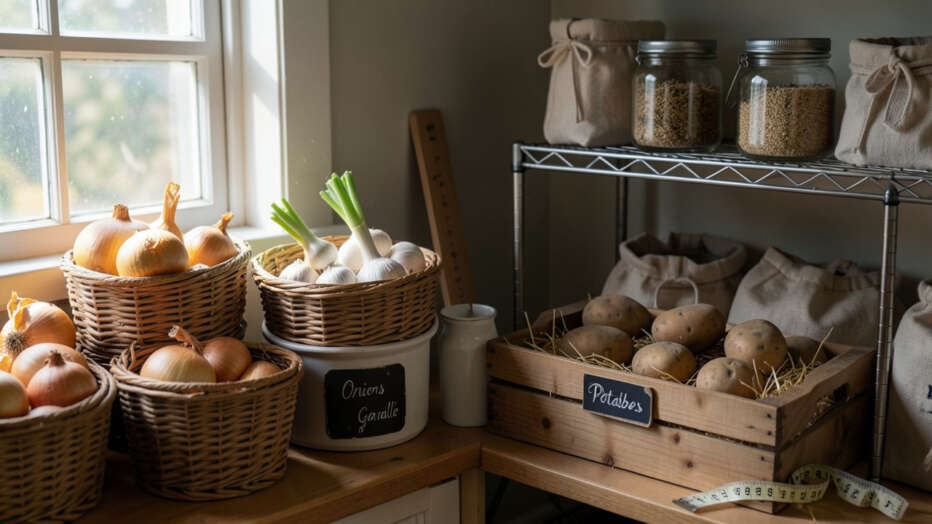
If you store these items in a pantry or cupboard, make sure it’s not too warm. Avoid storing them near appliances that generate heat, like ovens or dishwashers. Keep them on shelves where air can circulate around them.
You can use shelves or bins to keep them organized. For example, a wire basket can hold your onions. A small ceramic jar can hold your garlic.
Potatoes can go in a larger basket or a paper bag.
Cellar or Basement Storage
If you have a cool, dark cellar or basement, this is the best place. You can use crates or shelves. Ensure there isn’t too much humidity.
Good ventilation is still important, even in a cellar.
Consider using wooden crates or sturdy cardboard boxes. These allow for some airflow. You can group items together.
For example, keep all your potatoes in one area and onions in another. This makes it easy to check on them.
Avoiding Common Storage Pitfalls
A big pitfall is overcrowding. When items are packed too tightly, air can’t move. This leads to moisture buildup and faster spoilage.
Give your produce some breathing room.
Another pitfall is inconsistent temperatures. If your storage area gets very hot and then very cold, it can affect the produce. Try to maintain a stable, cool environment.
This is key to successful storage.
When to Use What: Freshness Indicators
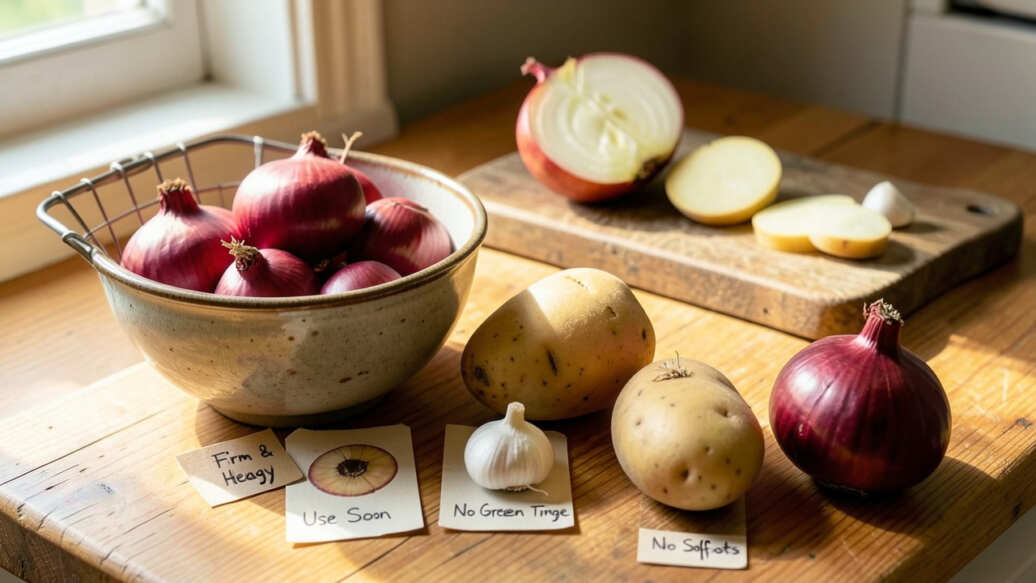
Knowing when your produce is still good is important. There are signs to look for. This helps you use items before they go bad.
It’s part of knowing How to Store Onions, Garlic, and Potatoes Properly.
Signs of Fresh Onions
Fresh onions are firm and dry. They have a papery skin that is intact. The neck should be dry and closed.
Avoid onions that feel soft, have dark spots, or smell moldy. Sprouting is okay, but very long sprouts mean they are older.
Signs of Fresh Garlic
Good garlic bulbs are firm and plump. The cloves should be tightly packed. The papery skin should be dry and intact.
Avoid garlic that is soft, has mold, or has started to sprout significantly.
Signs of Fresh Potatoes
Fresh potatoes are firm and smooth. They should not have soft spots, dark blemishes, or excessive sprouts. Avoid potatoes that are shriveled, soft, or have a green tint.
A few small sprouts are usually fine to remove.
The Importance of Proper Storage for Your Kitchen
Taking the time to learn How to Store Onions, Garlic, and Potatoes Properly pays off in many ways. It means less waste, better flavor, and convenience in your cooking. When your ingredients are fresh, your meals are naturally tastier.
Proper storage also saves you money. You won’t have to throw away spoiled produce as often. This means you get more use out of what you buy.
It’s a simple step that makes a big difference in your kitchen.
Frequently Asked Questions
Can I store onions and potatoes together?
No, it is best not to store onions and potatoes together. Potatoes release moisture and gases that can cause onions to sprout and spoil faster. Keep them in separate locations.
How long do onions last when stored properly?
Whole onions, stored in a cool, dry, dark, and well-ventilated place, can last for several months, often 3-6 months or even longer. Cut onions stored in the refrigerator last about 7-10 days.
Should I wash potatoes before storing them?
No, do not wash potatoes before storing them. Washing adds moisture, which can encourage rot and spoilage. Brush off any excess dirt and store them dry.
How do I know if garlic has gone bad?
Bad garlic may be soft, mushy, have mold, or emit an unpleasant odor. Small sprouts are usually okay to remove, but if the bulb is soft or discolored, it’s best to discard it.
Can I store garlic in the refrigerator?
It is generally not recommended to store whole garlic bulbs in the refrigerator. The cold, moist environment can cause them to sprout and become soft. Store them at room temperature in a dry, dark place.
What does it mean when potatoes turn green?
Potatoes turn green when exposed to light. This is due to the development of solanine, a natural compound that can be toxic in large amounts. It’s best to cut away small green spots or discard potatoes that are heavily green.
How to store onions, garlic, and potatoes properly to prevent sprouting?
To prevent sprouting, store onions, garlic, and potatoes in a cool, dark, and dry place with good ventilation. Avoid storing them in plastic bags or in humid conditions. For potatoes, keep them away from light, and for onions and garlic, ensure good airflow.
Final Thoughts
By following these simple tips, you can easily extend the life of your onions, garlic, and potatoes. Proper storage means less waste and better ingredients for your cooking. Enjoy your fresher produce!