How To Soften Butter Quickly
At a Glance To soften butter quickly without melting it, use methods like the glass and hot water trick, grating it from cold, or microwaving in short bursts with caution. Each technique ensures the b…
To soften butter quickly without melting it, use methods like the glass and hot water trick, grating it from cold, or microwaving in short bursts with caution. Each technique ensures the butter reaches a consistency that creams uniformly with sugar, which is essential for creating light and tender baked goods. The butter is perfectly softened when it bends easily without cracking but still holds its shape and feels cool to the touch.
Sometimes you just need butter to be soft right now, like for baking cookies or spreading on toast. Waiting for butter to soften on its own can take forever, and nobody wants that! Learning How to Soften Butter Quickly means you can get your recipes done faster and enjoy your treats sooner.
You’ll gain the power to whip up delicious things without the frustrating wait.
Key Takeaways
- Understand why softened butter is essential for many recipes.
- Discover multiple fast methods to soften butter without melting it.
- Learn how to tell when butter is perfectly softened.
- Get tips to avoid common mistakes when softening butter.
- Find out which methods work best for different situations.
Get Butter Soft Fast for Baking Success
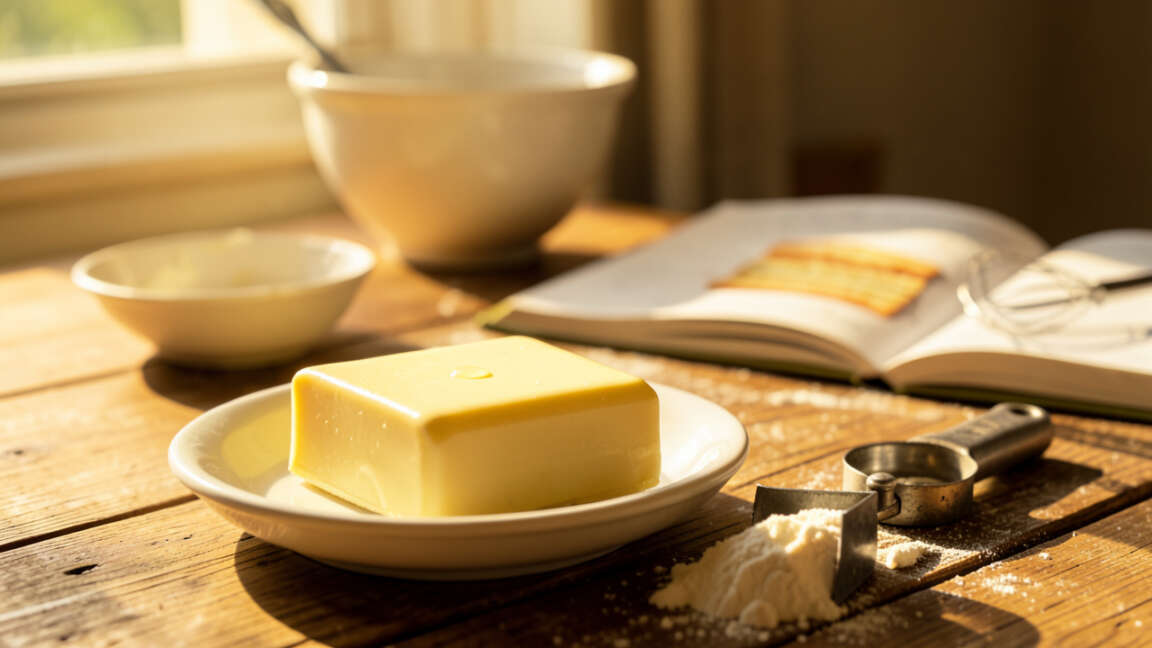
When a recipe calls for softened butter, it’s usually for a good reason. Softened butter mixes much better with sugar and other ingredients. This creates a lighter, airier texture in cakes, cookies, and frosting.
If you try to use cold, hard butter, you’ll end up with lumps and a less-than-ideal final product. You might even overwork your dough or batter, making your baked goods tough. Knowing How to Soften Butter Quickly saves your baking projects and ensures delicious results.
Why Softened Butter Matters for Baking
Butter is made of fat and water. When butter is cold, the fat molecules are tightly packed. This makes it stiff and hard to mix.
Softened butter means the fat molecules are more relaxed and spreadable. This allows them to trap air when creamed with sugar. This trapped air is what makes baked goods rise and become fluffy.
It’s like whipping egg whites; you need them at the right temperature and consistency to get volume.
Using butter that is too cold means it won’t cream properly with sugar. You’ll have small, hard pieces of butter throughout your mixture. This can lead to uneven baking and a greasy texture.
On the other hand, melted butter is a different story. Melted butter makes baked goods dense and chewy, which is great for some recipes but not when you need that light, tender crumb.
The Best Quick Methods for Softening Butter
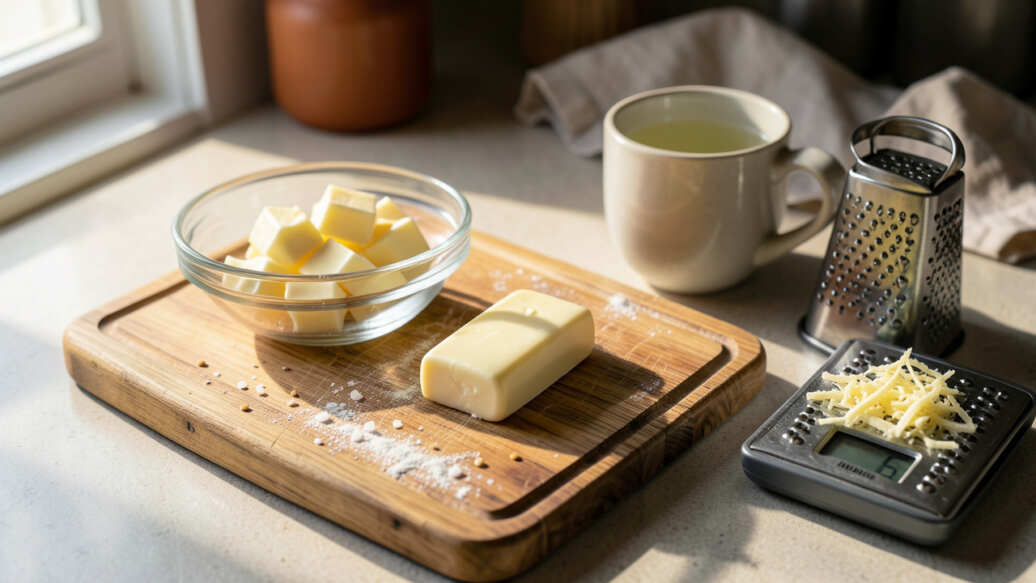
There are several clever ways to get your butter to the perfect softness in just minutes. These methods are designed to work fast without turning your butter into liquid. Let’s look at the most effective ones.
The Glass and Hot Water Trick
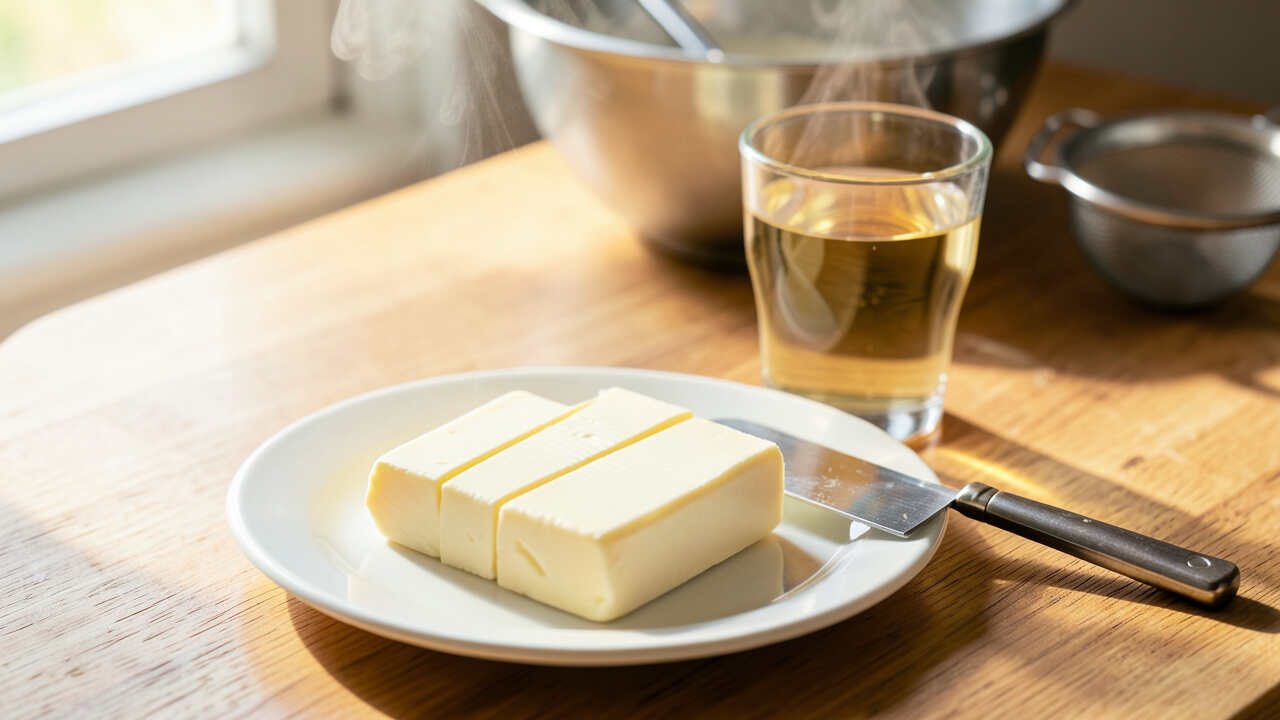
This is a classic for a reason. It’s simple and effective. You’ll need a stick or block of butter and a heatproof glass or mug.
- First, place your butter on a small plate or in a microwave-safe bowl.
- Next, fill a glass or mug with very hot (but not boiling) water. Let it sit for about 30 seconds to warm the glass.
- Then, carefully pour the hot water out of the glass.
- Finally, place the warm, empty glass upside down over the butter. The heat from the glass will gently warm and soften the butter.
Check the butter after 2-5 minutes. It should be soft enough to press with your finger. This method is great because it’s gentle and avoids direct heat, which can melt the butter too quickly.
It’s a reliable way to practice How to Soften Butter Quickly.
Using a Rolling Pin or Mallet
If you need butter softened for something like pie crust, where you want small pieces of butter, this method is perfect. It also works for general softening.
- First, unwrap your butter and place it between two sheets of parchment paper or in a sturdy plastic bag.
- Second, use a rolling pin, the flat side of a meat mallet, or even a heavy can to gently pound and flatten the butter.
- Then, continue to flatten it until it’s about half an inch thick.
- Finally, let it sit for a few minutes. The flattened butter will soften much faster than a solid block.
This technique is excellent for How to Soften Butter Quickly when you need it for recipes that require butter to be cut into flour, like biscuits or scones. The thinness allows it to warm up rapidly.
The Grater Method
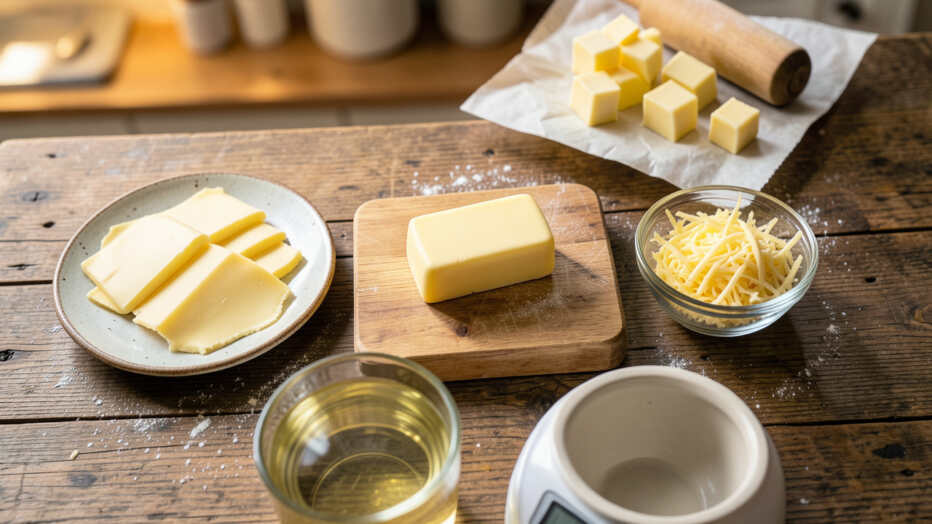
A cheese grater can be a surprisingly useful tool for softening butter. It breaks the butter into small pieces that warm up very fast.
- First, make sure your butter is cold but not frozen.
- Second, use the large holes of a box grater to grate the butter directly onto a plate or into a bowl.
- Third, the grated butter will be in thin strands.
- Finally, let it sit for just a couple of minutes. It will soften almost instantly because of its increased surface area.
This is one of the fastest ways to achieve softened butter, making it ideal for last-minute baking needs. It’s a fantastic trick for How to Soften Butter Quickly.
The Microwave – With Caution!
The microwave is the fastest option, but it requires the most care. It’s very easy to turn butter into a melted puddle if you’re not careful.
- First, place your butter on a microwave-safe plate.
- Second, use the lowest power setting on your microwave (often 10-30%).
- Third, microwave in very short bursts, usually 5-10 seconds at a time.
- Fourth, check the butter after each burst. You want it to be soft to the touch, not oily or liquid.
- Finally, remove it from the microwave as soon as it reaches the desired softness.
This method is best for when you are in a real pinch. It’s a direct answer to How to Soften Butter Quickly, but it requires your full attention. If you overdo it, you’ll have melted butter, which is not the same as softened.
Warm Hands Method
Sometimes, the simplest tools are right at your fingertips – literally!
- First, unwrap your butter.
- Second, hold the stick of butter in your hands.
- Third, gently squeeze and roll it between your palms.
- Finally, continue this for a minute or two until it feels pliable.
This works best for a single stick of butter and is a good option if you only need a small amount softened. It’s a surprisingly effective way to How to Soften Butter Quickly with zero equipment.
How to Tell When Butter is Perfectly Softened
Knowing when your butter is just right is key. You don’t want it too hard, and you definitely don’t want it melted.
- The Finger Test: The best indicator is the ‘finger test’. Gently press the surface of the butter with your fingertip. It should yield slightly and leave a small indentation, but not feel greasy or mushy.
- Consistency: It should feel pliable and spreadable, like thick frosting or room-temperature cream cheese.
- Appearance: It should look like butter, not like oil or water. There should be no visible liquid separating from the solids.
Perfectly softened butter will mix smoothly into your ingredients without leaving streaks or lumps of hard butter. This is the ideal state for creaming and incorporating.
Common Mistakes to Avoid
Even with quick methods, it’s possible to go wrong. Here are a few things to watch out for.
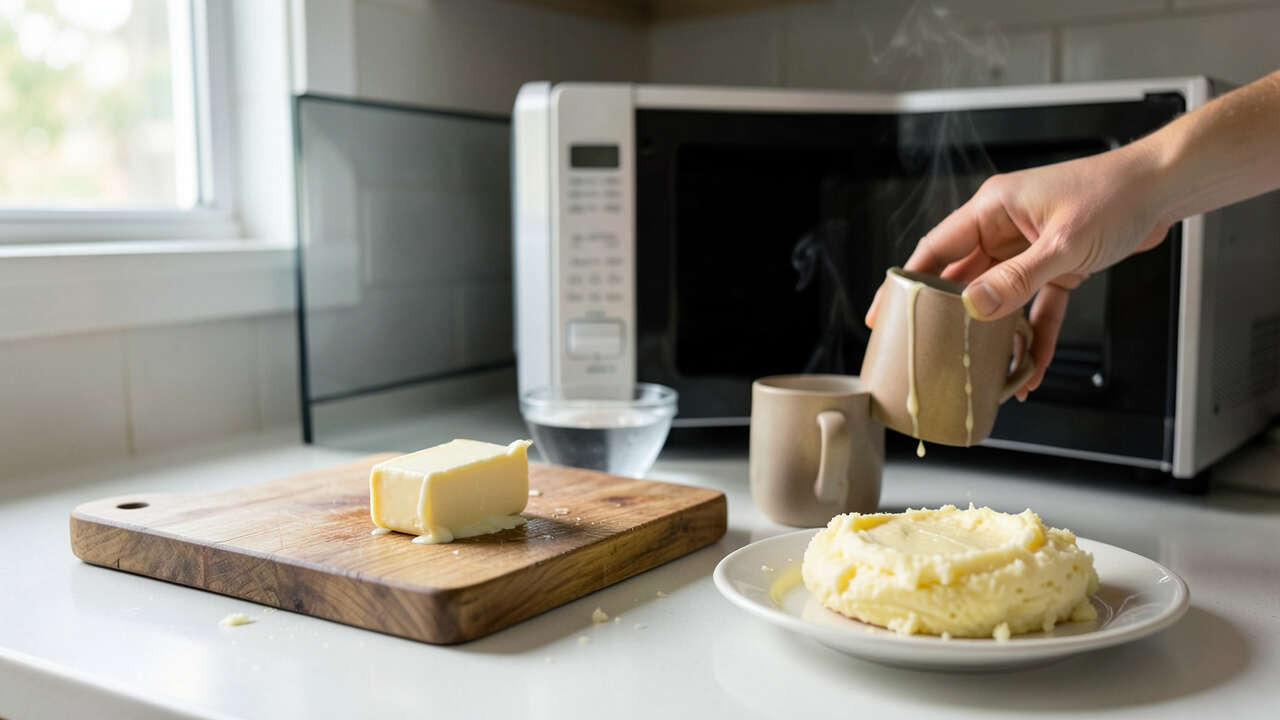
- Over-Microwaving: This is the most common mistake. A few seconds too long can turn softened butter into melted butter. Always use short bursts and check frequently.
- Using Boiling Water: For the glass trick, use hot tap water, not water straight from a boiling kettle. Boiling water can melt the butter too quickly or even make it oily.
- Not Letting it Rest: Some methods, like the glass trick or flattening, require a short waiting period. Don’t rush this step; it allows the heat to distribute evenly.
- Using Melted Butter When Softened is Needed: Melted butter changes the texture of baked goods dramatically. If the recipe specifically says “softened,” stick to methods that achieve that state, not liquid.
Avoiding these pitfalls will help you master How to Soften Butter Quickly every time.
When to Use Which Method
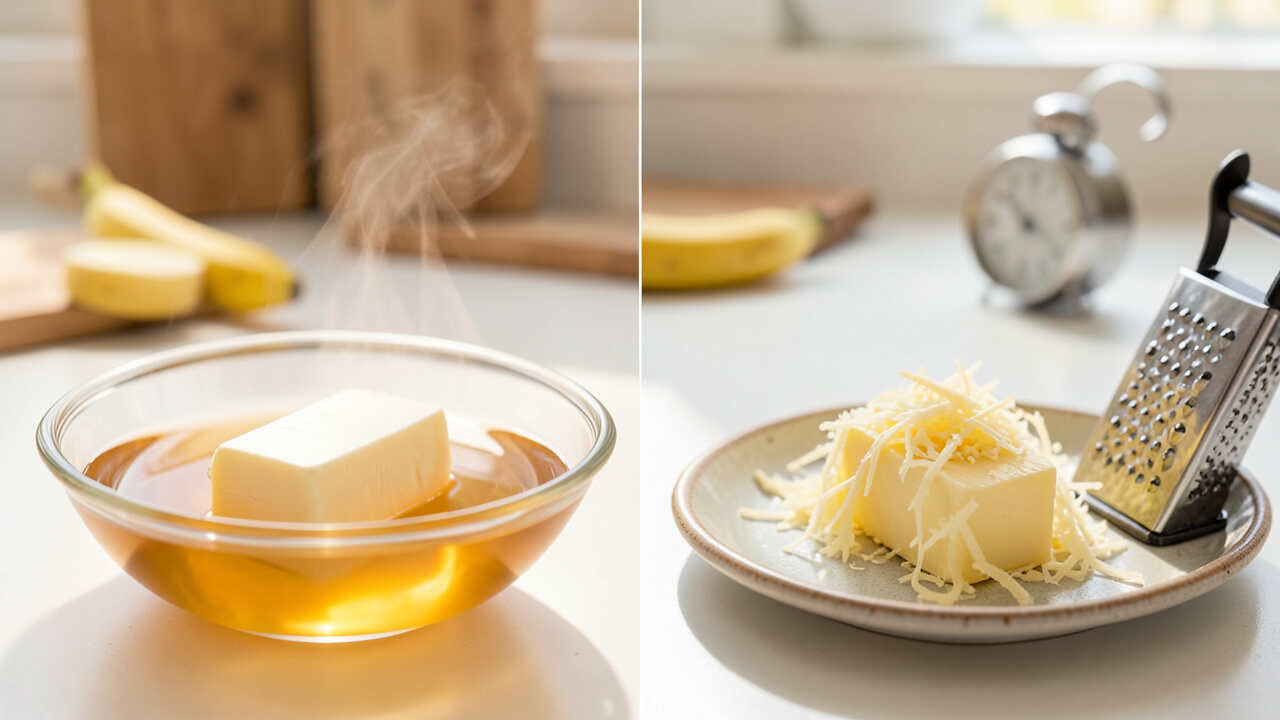
The best method often depends on how much time you have and how much butter you need.
Choosing the right approach ensures you get the perfect butter consistency for your needs. This table helps you decide the best way for your situation when you need to know How to Soften Butter Quickly.
The Difference Between Softened and Melted Butter
It’s crucial to understand that softened butter and melted butter are not interchangeable in most recipes. They behave very differently.
Softened Butter: This butter is pliable and holds its shape but yields to pressure. When creamed with sugar, it traps air, leading to lighter, fluffier baked goods. It’s ideal for cookies, cakes, and frostings where creaming is a key step.
The structure it provides is essential for texture.
Melted Butter: This butter is completely liquid. It incorporates differently into mixtures, often creating a denser, chewier texture. Recipes that call for melted butter, like brownies or some cakes, rely on its liquid state to create a fudgy or moist crumb.
Using softened butter when melted is called for, or vice versa, will significantly alter the final outcome.
Knowing the distinction is key to successful baking. Mastering How to Soften Butter Quickly means you can achieve the right texture without waiting hours.
Frequently Asked Questions
Can I soften butter in cold water?
No, cold water won’t soften butter. You need the warmth from hot water to make it pliable. The glass and hot water method uses the residual heat from a warm glass, not the water itself, to soften the butter gently.
How do I know if I’ve over-softened my butter?
If your butter looks oily, is actively melting, or leaves a greasy residue on your fingers after a light touch, it’s likely over-softened or melted. Softened butter should be pliable but still hold its shape and not feel greasy.
Is it okay to soften butter for frosting?
Yes, softened butter is essential for making smooth, creamy frosting. Using the quick methods described will help you achieve the right consistency for your frosting without waiting for butter to soften naturally.
What if I only need a small amount of butter softened?
The grater method or the warm hands method are excellent for softening small amounts of butter quickly. They work fast and allow you to control the softening process precisely.
Can I microwave butter if I need it for a recipe that calls for melted butter?
Yes, if your recipe specifically calls for melted butter, you can use the microwave. Just be careful not to overdo it. Microwave in short intervals, checking frequently until it’s fully liquid.
How can I prevent butter from melting when trying to soften it quickly?
The key is to use gentle heat and short bursts of time. Avoid direct heat sources like a very hot stovetop or high microwave power. Methods like the glass trick or grating allow for controlled, gradual softening.
Does the method for How to Soften Butter Quickly affect the taste?
Generally, no. As long as you don’t melt the butter or burn it, the taste should remain the same. The methods are designed to alter the texture, not the flavor, of the butter.
Final Thoughts
You now have several easy ways to get butter soft in minutes. Whether you’re baking cookies or making toast, these tricks will save you time and frustration. Experiment with these methods to find your favorite for knowing How to Soften Butter Quickly.