Drawer Organization Hacks For Utensils
At a Glance Effective drawer organization for utensils begins with removing duplicates and unused items, then using adjustable dividers to separate categories such as spatulas, whisks, and tongs for i…
Effective drawer organization for utensils begins with removing duplicates and unused items, then using adjustable dividers to separate categories such as spatulas, whisks, and tongs for instant access. Grouping like with like prevents clutter and ensures that each tool has a designated spot, while creative solutions like investing in knife blocks or magnetic strips keep blades safely stored and out of the way. Implementing these methods transforms a chaotic drawer into an efficient system that saves time during meal prep and maximizes available space even in smaller kitchens.
Keeping your kitchen drawers tidy can make cooking so much easier. When you can grab the right utensil without a fuss, meal prep becomes less of a chore and more enjoyable. Imagine opening a drawer and finding exactly what you need, right away.
That’s the power of good organization. This guide will show you simple, effective Drawer Organization Hacks for Utensils that will transform your kitchen space and save you time every day.
Key Takeaways
- Learn how to use dividers to keep utensils separate and easy to find.
- Discover smart storage solutions for oddly shaped or bulky kitchen tools.
- Find out how to declutter your utensil drawer to remove duplicates and unused items.
- Understand the benefits of grouping similar utensils together for efficiency.
- Get tips on maximizing drawer space, even in smaller kitchens.
- Explore creative ways to store knives safely and accessibly.
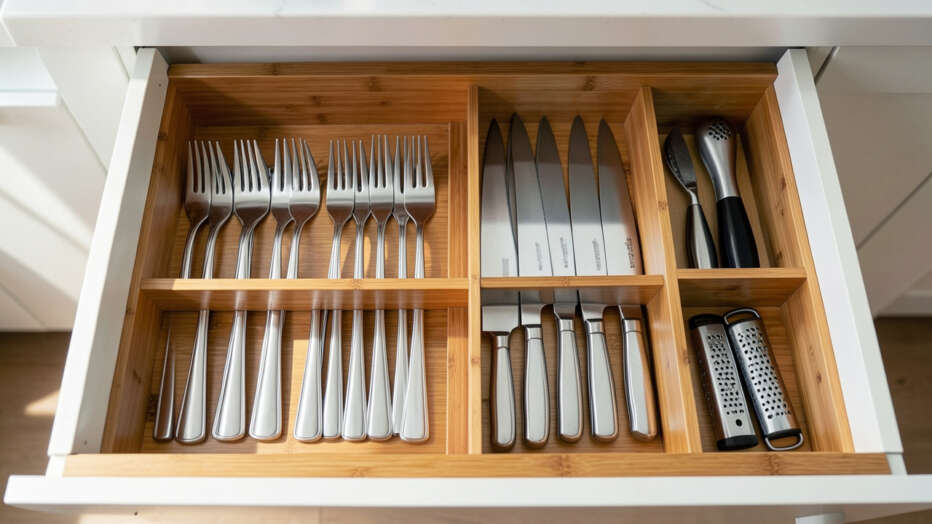
Make Every Inch Count with Smart Drawer Dividers
Your utensil drawer can quickly become a jumbled mess if items aren’t kept in their place. This is where drawer dividers become your best friend. They are the foundation for any good system of Drawer Organization Hacks for Utensils.
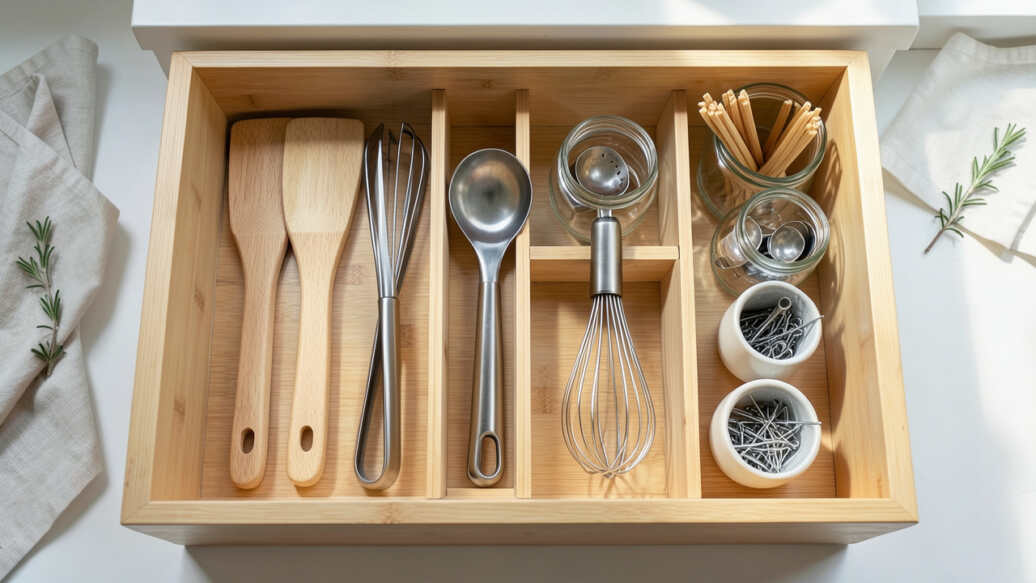
Dividers create separate compartments, stopping utensils from sliding around and mixing together.
There are many types of dividers available. Some are adjustable, meaning you can change their size to fit your drawer and your specific needs. Others are fixed, often made of wood or plastic, and come in various lengths and widths.
You can even get creative and make your own using cardboard or small boxes.
Choosing the Right Dividers
When picking dividers, think about what you store. For small, everyday items like teaspoons, forks, and butter knives, narrower compartments work well. For larger tools like spatulas, ladles, or whisks, you’ll need deeper, wider sections.
- Adjustable Dividers: These are great because they can grow with your needs. You can move them around to create custom spaces.
- Bamboo or Wooden Dividers: These add a natural, warm look to your kitchen. They are sturdy and durable.
- Plastic Dividers: Often the most affordable option, plastic dividers are easy to clean and come in many shapes and sizes.
- DIY Options: Repurpose old boxes or cut sturdy cardboard to create your own compartments.
The goal is to create distinct zones within the drawer. This prevents the common problem of a “junk drawer” where everything gets mixed up. Effective use of dividers is a core part of successful Drawer Organization Hacks for Utensils.
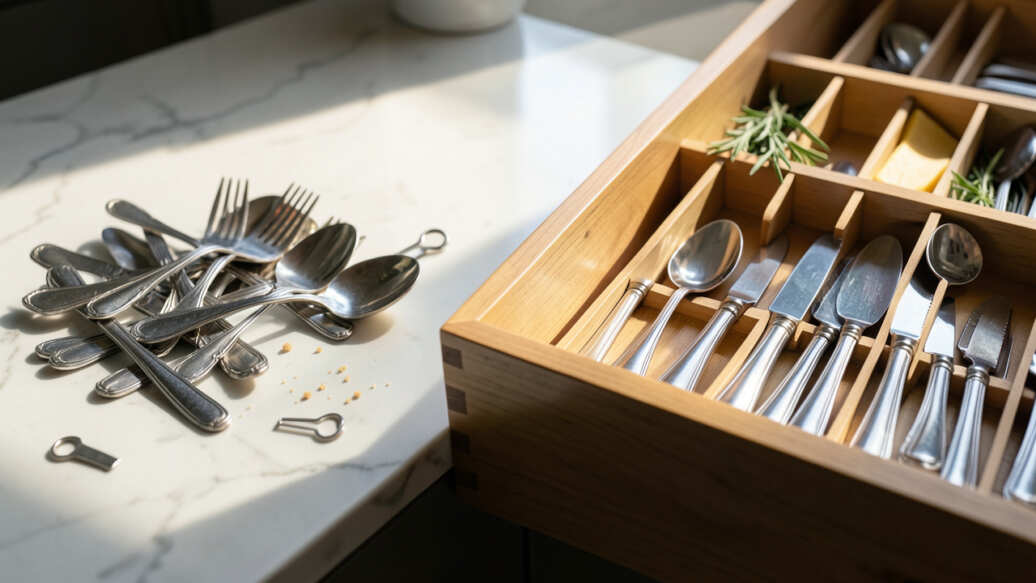
Declutter and Conquer: The First Step to Order
Before you can organize, you need to know what you’re organizing! A cluttered drawer is a prime candidate for a good decluttering session. This step is crucial for any successful drawer organization project, especially for your utensils.
Take everything out of the drawer. Yes, everything. Lay it all out on your counter or kitchen table.
Now, start sorting. Look for duplicates. Do you really need three identical potato peelers?
Probably not. Also, identify any items that are broken, bent, or just never get used. These are the first things to go.
The “Keep, Donate, Toss” Method
This simple method helps you make quick decisions.
- Keep: These are items you use regularly and are in good condition.
- Donate: If you have perfectly good items you no longer need, consider donating them to a local charity.
- Toss: Anything broken, rusted, or beyond repair should be thrown away.
Be honest with yourself. If you haven’t used a specific gadget in over a year, chances are you won’t miss it. Reducing the sheer volume of items in your drawer is a powerful way to make organization easier.
This decluttering phase is a vital part of applying effective Drawer Organization Hacks for Utensils.
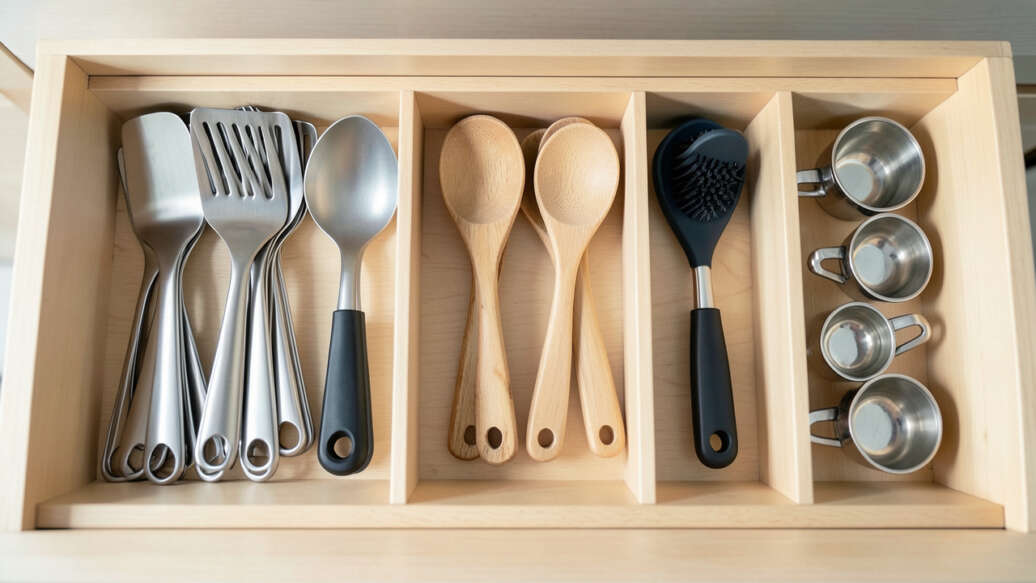
Group Like with Like: The Power of Categorization
Once you’ve decluttered, the next step is to group similar items together. This makes finding what you need much faster. Think about how you use your utensils.
You likely use baking utensils together, cooking utensils together, and eating utensils together. This categorization is a fundamental principle of Drawer Organization Hacks for Utensils.
For example, all your spatulas, whisks, and serving spoons can go in one section. Your knives and peelers might go in another. Cutlery like forks, spoons, and knives naturally belong in their own compartments.
This system means you don’t have to dig through a pile of spoons to find a whisk.
Smart Grouping Strategies
Consider the frequency of use. Items you grab daily, like your main eating utensils, should be the most accessible. Less frequently used items, such as specialized baking tools, can be placed towards the back or in a less prime spot.
- Eating Utensils: Forks, knives, spoons.
- Cooking Utensils: Spatulas, ladles, tongs, whisks.
- Prep Tools: Peelers, graters, can openers, measuring spoons/cups.
- Serving Utensils: Large spoons, salad servers, pie servers.
When you implement these grouping strategies, you create a logical flow within your drawer. This makes your kitchen workflow much smoother. It’s a simple yet highly effective technique for Drawer Organization Hacks for Utensils.
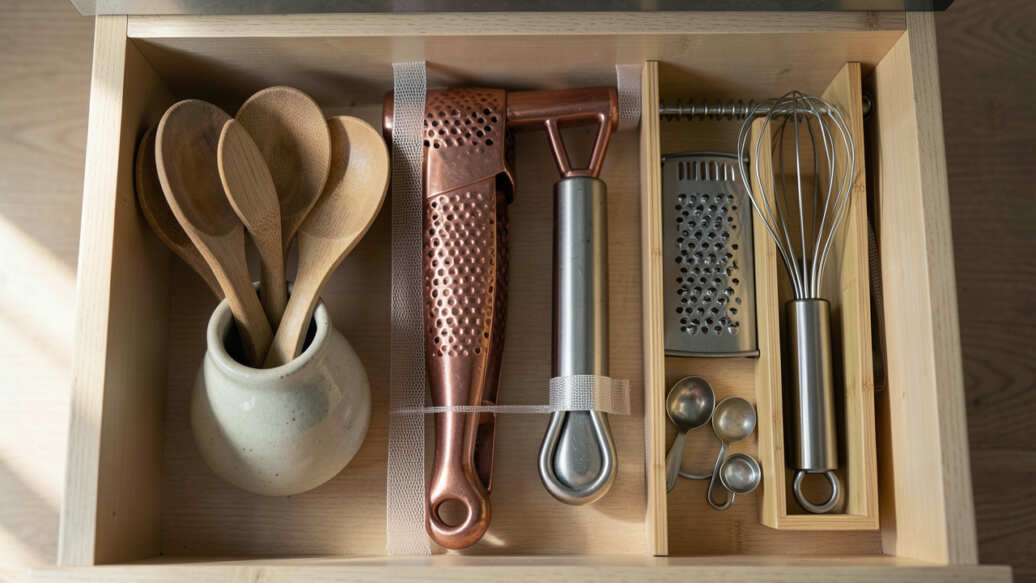
Creative Solutions for Bulky and Oddly Shaped Items
Some kitchen tools are just plain awkward. Think about large serving spoons, bulky whisks, or long ladles. Standard drawer dividers might not accommodate these items well.
This is where creative thinking comes into play for your Drawer Organization Hacks for Utensils.
One popular solution is using tiered organizers or stackable trays. These allow you to utilize vertical space within the drawer. You can place smaller items in the lower trays and larger items on top.
This is especially useful for drawers that aren’t very deep.
Handling Awkward Tools
For long items like rolling pins or extra-long spatulas, you might need a dedicated space. If your drawer is long enough, a single, long compartment can work. Alternatively, consider storing these items upright in a tall container on your counter if drawer space is extremely limited.
Some people find success using small, separate bins or containers within the main drawer. These can hold specific types of awkward items, like a bin just for whisks or one for large serving spoons. This keeps them contained and prevents them from sprawling into other sections.
Knife Storage: Safety First
Knives are a common utensil that requires special attention. Storing them loose in a drawer can be dangerous. A knife block is ideal, but if you don’t have one, consider in-drawer knife organizers.
These have slots that hold each knife securely, keeping the blades protected and your fingers safe.
These specialized solutions ensure that even your most challenging utensils have a home. They are essential for a truly organized kitchen and are a smart addition to your Drawer Organization Hacks for Utensils.
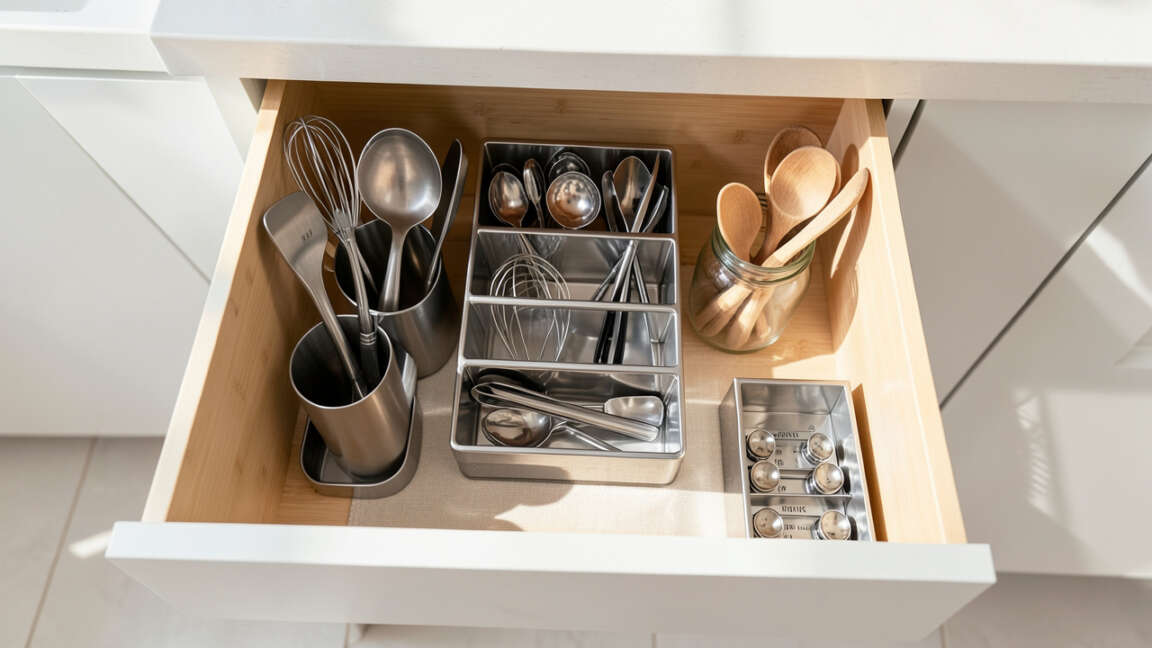
Maximize Space with Vertical Storage and Accessories
When your drawers feel too small, it’s time to think vertically. This is a key strategy for making the most of your kitchen space. Vertical storage can dramatically increase the capacity of your utensil drawers, making your Drawer Organization Hacks for Utensils even more effective.
Tiered drawer organizers are fantastic for this. They look like small staircases inside your drawer. You can put smaller, flatter items on the lower tiers and larger, bulkier items on the upper tiers.
This prevents items from hiding underneath each other, making everything visible and accessible.
Smart Accessories to Consider
There are many clever accessories designed to help you maximize drawer space.
- Stackable Trays: Similar to tiered organizers, these allow you to create multiple levels within a single drawer.
- Expandable Drawer Organizers: These can be adjusted to fit the exact width of your drawer, ensuring no wasted space.
- Utensil Caddies: Small, open containers that can hold a specific category of utensils and can be easily lifted out of the drawer.
- Magnetic Strips (for knives): While not strictly for drawers, if you have a large knife set, a magnetic strip on a backsplash can free up drawer space.
Thinking vertically and using these accessories can transform a chaotic drawer into a model of efficiency. It’s about using every cubic inch wisely. These advanced Drawer Organization Hacks for Utensils help you achieve a truly streamlined kitchen.
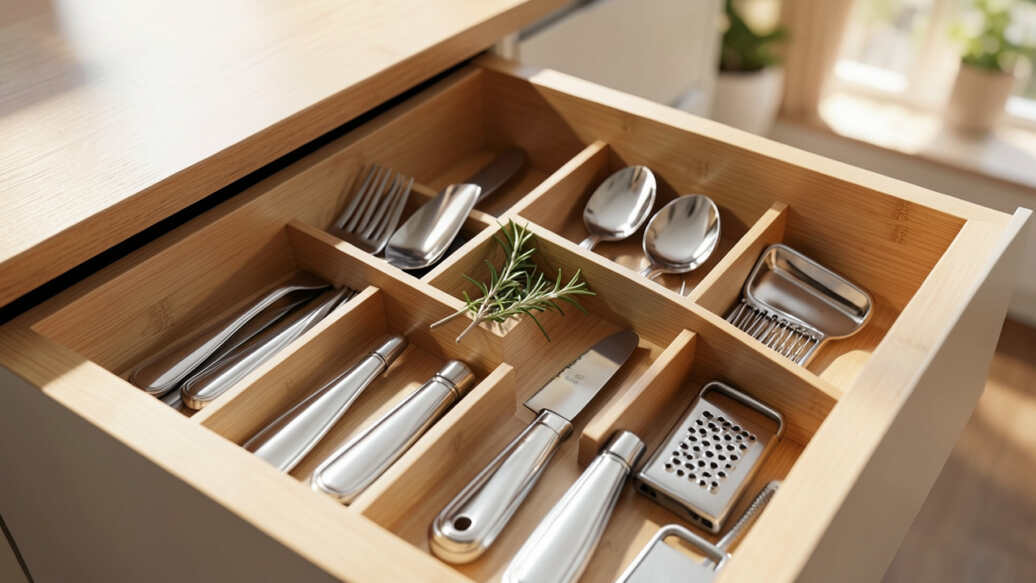
The Benefits of an Organized Utensil Drawer
Having an organized utensil drawer isn’t just about appearances; it offers real, practical benefits. It saves you time, reduces stress, and can even make you a more confident cook. When your tools are readily available, cooking becomes a more fluid and enjoyable process.
Think about those rushed mornings. If your coffee spoon is right there, you save precious minutes. During busy meal prep, not having to rummage through a jumbled drawer means you can focus on the task at hand.
This efficiency is a direct result of implementing good Drawer Organization Hacks for Utensils.
Time Savings and Reduced Frustration
A well-organized drawer means you can find what you need instantly. No more opening multiple drawers or digging through a messy pile. This saves you significant time over the course of a week, month, and year.
It also reduces the frustration that comes with searching for a misplaced item.
Improved Kitchen Workflow
When your utensils are grouped logically, your kitchen workflow improves. You can move from one task to the next seamlessly. For example, having all your measuring tools in one spot makes baking much easier.
This organized approach contributes to a more pleasant and productive cooking experience.
A More Pleasant Cooking Environment
A tidy kitchen can lead to a tidier mind. When your workspace is organized, it feels less chaotic. This can make cooking feel less like a chore and more like a relaxing activity.
The satisfaction of opening a neat drawer is a small but significant boost to your overall kitchen enjoyment.
Frequently Asked Questions
What are the best drawer organization hacks for utensils if I have a small kitchen?
For small kitchens, focus on decluttering aggressively and using vertical storage solutions like tiered organizers or stackable trays. Grouping similar items tightly also saves space.
How can I safely store knives in my utensil drawer?
The safest way is to use an in-drawer knife block or organizer that has individual slots for each knife. This protects the blades and prevents accidental cuts.
Should I buy specific utensil drawer organizers, or can I use household items?
You can definitely use household items! Repurposed small boxes, cut-up cardboard dividers, or even old food containers can work well as DIY drawer organization hacks for utensils.
How often should I declutter my utensil drawer?
Aim to declutter your utensil drawer at least once a year, or whenever you notice it starting to get messy. This helps maintain order and prevent clutter buildup.
What is the easiest way to start implementing drawer organization hacks for utensils?
Start by emptying the drawer completely and sorting through everything. Then, use dividers or containers to create distinct zones for different types of utensils.
Final Thoughts
Transforming your utensil drawer from chaos to calm is achievable with simple strategies. By using dividers, decluttering, and grouping items, you’ll find cooking more enjoyable and efficient. Implement these Drawer Organization Hacks for Utensils to create a tidier, more functional kitchen space.