Air Fryer Cooking Time & Temperature Chart
At a Glance An air fryer cooking time and temperature chart provides specific time and temperature settings for different foods to achieve consistent crispness and doneness. The chart accounts for var…
An air fryer cooking time and temperature chart provides specific time and temperature settings for different foods to achieve consistent crispness and doneness. The chart accounts for variations between air fryer models and food types, such as chicken, vegetables, and fries, allowing for precise adjustments. Relying on this chart eliminates guesswork and prevents overcooking or undercooking, ensuring reliable results every time.
Getting your favorite foods just right in the air fryer can feel like a guessing game sometimes. You want that perfect crisp, but you don’t want to burn your dinner or end up with something undercooked. That’s where knowing the right settings makes a huge difference.
Having a reliable Air Fryer Cooking Time & Temperature Chart handy means you can cook with confidence every time. This guide will help you understand what settings work best for different foods, saving you time and making your air fryer a go-to kitchen tool for delicious meals.
Key Takeaways
- Understand how different foods need specific times and temperatures for best results.
- Learn how to adjust times and temperatures based on your specific air fryer model.
- Discover how to cook common items like chicken, vegetables, and fries perfectly.
- Gain confidence in using your air fryer for a variety of recipes.
- Avoid common mistakes that lead to overcooked or undercooked food.

Mastering Your Air Fryer: The Essential Time and Temperature Guide
Using an air fryer is a fantastic way to get crispy, delicious food with less oil. But to get the best results, you need to know the right settings. A good Air Fryer Cooking Time & Temperature Chart is your secret weapon.
It takes the guesswork out of cooking, helping you achieve that perfect crunch without burning your meals. We’ll break down how to use these charts and why they matter for everything you cook.

Why an Air Fryer Cooking Time & Temperature Chart Matters
Think of an Air Fryer Cooking Time & Temperature Chart like a recipe for your air fryer. Every food item cooks a little differently. Some need high heat for a short time, while others prefer a moderate temperature for longer.
Without a chart, you’re just guessing. This can lead to wasted food and frustration.
Using a chart helps you:
- Save Time: No more checking food every few minutes.
- Reduce Waste: Avoid burning or undercooking your meals.
- Improve Taste: Get that ideal crispy texture and flavor.
- Build Confidence: Feel sure about what you’re cooking.
Understanding Air Fryer Basics: Heat and Airflow
Air fryers work by circulating hot air very quickly around your food. This process is similar to how a convection oven works, but on a smaller scale. The hot air cooks the food evenly, creating a crispy exterior.
The temperature you set controls how hot that air gets, and the time tells the air fryer how long to keep that hot air moving.
Understanding these basics helps you appreciate why an Air Fryer Cooking Time & Temperature Chart is so useful. It’s not just about setting a number; it’s about controlling the cooking environment to get the best outcome for each type of food.

The Core Components of an Air Fryer Cooking Time & Temperature Chart
A good Air Fryer Cooking Time & Temperature Chart usually includes a few key pieces of information for each food item. You’ll typically see the type of food, the recommended temperature in degrees Fahrenheit (°F) or Celsius (°C), and the cooking time in minutes. Some charts might also include tips for preparation, like whether to preheat the air fryer or shake the basket halfway through.
Here’s what you can expect to find:
- Food Item: What you are cooking (e.g., chicken wings, broccoli, fries).
- Temperature: The ideal heat setting for that food.
- Time: How long the food should cook.
- Preparation Tips: Any extra steps, like preheating or flipping.
Using a General Air Fryer Cooking Time & Temperature Chart
When you first get an air fryer, you might rely on a general chart. These charts are great for common foods. For example, you might see that chicken wings typically cook at 400°F for 20-25 minutes.
Or that frozen fries need 380°F for about 15-20 minutes.
First, identify the food you want to cook on the chart. Second, note the suggested temperature and time. Third, preheat your air fryer if the chart suggests it.
This helps the food cook more evenly from the start. Finally, place your food in the basket, set the temperature and time, and let the air fryer do its work.

Adapting Your Air Fryer Cooking Time & Temperature Chart for Your Model
It’s important to remember that air fryers can vary. Not all air fryers heat the same way, even if they have the same wattage. Some run hotter, while others might run a bit cooler.
This means you might need to adjust the times and temperatures from a general Air Fryer Cooking Time & Temperature Chart.
Here’s how to adapt:
- Start with the Chart: Use the chart’s recommendations as a starting point.
- Check Early: For the first few times you cook something, check it a few minutes before the chart’s suggested time is up.
- Adjust as Needed: If your food is browning too quickly, lower the temperature slightly or reduce the cooking time. If it’s not crispy enough, increase the time or temperature a little.
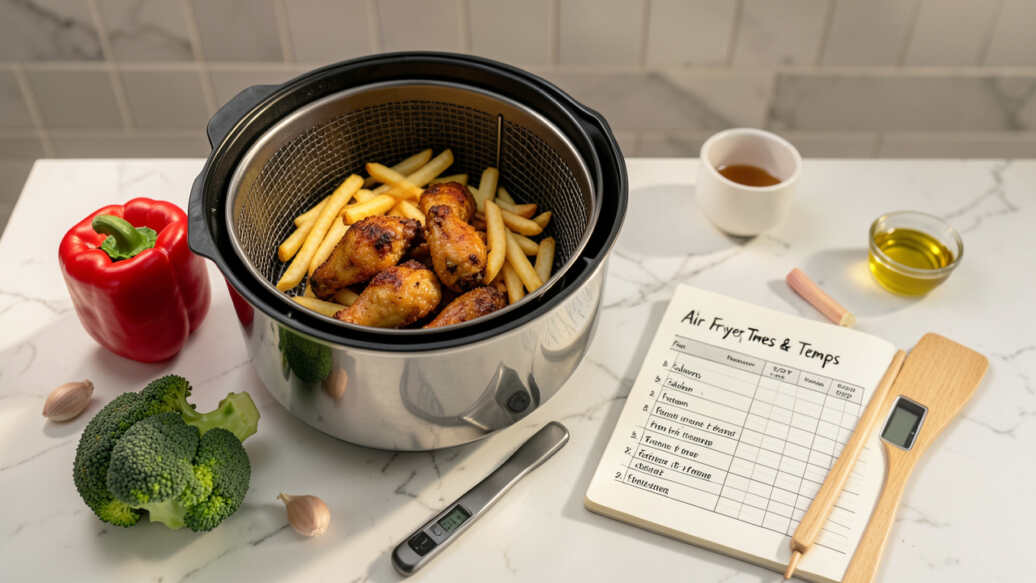
- Keep Notes: Jot down successful adjustments in your air fryer’s manual or on a piece of paper. This creates your own personalized Air Fryer Cooking Time & Temperature Chart.

Cooking Common Foods: A Quick Guide
Let’s look at how a typical Air Fryer Cooking Time & Temperature Chart might guide you for some popular items. Remember, these are general guidelines and may need slight tweaks for your specific air fryer.
Chicken
Chicken is a favorite for air frying because it gets so wonderfully crispy. For chicken breasts, you might aim for around 375°F for 18-22 minutes, flipping halfway through. Chicken thighs might need a slightly higher temperature, like 390°F, for about 20-24 minutes.
Always ensure chicken is cooked through to an internal temperature of 165°F.
Vegetables
Many vegetables do wonderfully in the air fryer. Broccoli florets can be cooked at 390°F for 8-10 minutes, getting nicely tender and slightly charred. Brussels sprouts often benefit from a higher heat, around 400°F for 12-15 minutes, until crispy.
Root vegetables like potatoes and carrots might need a slightly lower temperature, like 370°F, and a longer cooking time, perhaps 20-25 minutes, to get tender inside and crisp outside.
Fries and Potatoes
Whether they are fresh-cut or frozen, fries are a staple. Frozen fries usually do best at 380°F for 15-20 minutes. If you’re making them from scratch, cut them into uniform sizes, toss with a little oil, and cook at 400°F for 15-20 minutes, shaking the basket every 5 minutes.
This ensures an even crispiness.
Seafood
Delicate items like shrimp cook very quickly. Shrimp might only need 375°F for 6-8 minutes. Fish fillets, depending on thickness, could need around 380°F for 10-14 minutes.
Always check for doneness, as seafood can go from perfect to overcooked in a flash.
Tips for Using Your Air Fryer Effectively
Beyond just following a chart, a few extra tips can help you get the most out of your air fryer. These practices ensure your food is cooked perfectly every time and that your appliance lasts longer.
Preheating Your Air Fryer
Most recipes and charts recommend preheating your air fryer. This is like preheating your oven. It ensures that the moment your food hits the basket, it starts cooking at the correct temperature.
This leads to more even cooking and crispier results. Many air fryers have a preheat setting, or you can simply set the desired temperature and run it for 3-5 minutes before adding food.
Not Overcrowding the Basket
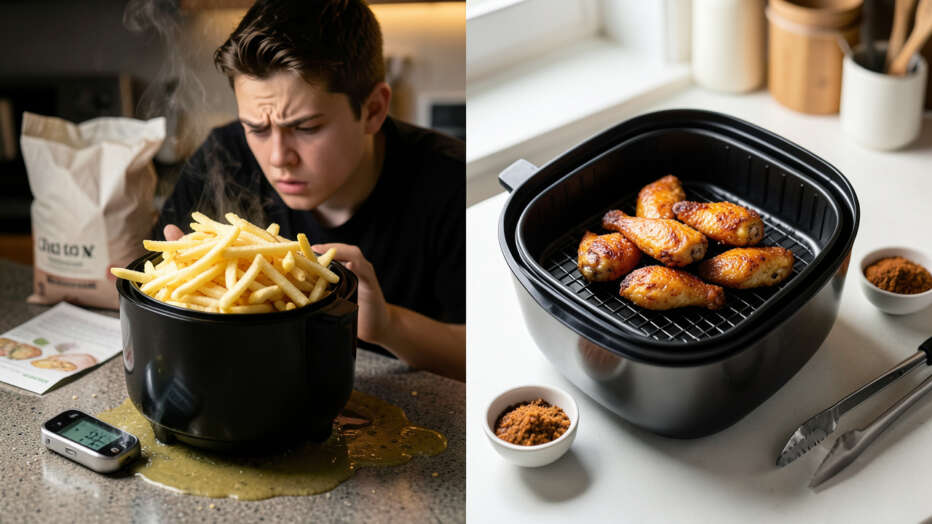
This is a crucial tip often overlooked. If you pack the air fryer basket too full, the hot air can’t circulate properly. This means your food will steam instead of crisping up.
It’s better to cook in batches if necessary. You want a single layer of food, or at least plenty of space between pieces, to get that signature air-fried texture.
Shaking and Flipping Food
For foods like fries, vegetables, or chicken pieces, shaking the basket or flipping the food halfway through the cooking time is essential. This ensures that all sides of the food get direct exposure to the hot air. It’s a simple step that makes a big difference in achieving even browning and crispiness throughout.
Cleaning Your Air Fryer
Regular cleaning is important for maintaining your air fryer’s performance. Food debris can affect how the air circulates and can even cause smoke. Most air fryer baskets and trays are non-stick and dishwasher safe, making cleanup relatively easy.
Always unplug the air fryer and let it cool down before cleaning.

Comparing Air Fryer Cooking Times and Temperatures
When you’re looking at different recipes or charts, you might notice variations in recommended times and temperatures. This is normal and highlights why understanding your own air fryer is key. Here’s a simple comparison of common foods and their typical cooking parameters.
This table provides a quick reference. Always use it as a guide and adjust based on your air fryer and the thickness of your food. A detailed Air Fryer Cooking Time & Temperature Chart is your best friend for consistent results.
Troubleshooting Common Air Frying Issues
Even with a good Air Fryer Cooking Time & Temperature Chart, you might run into issues. Here are some common problems and how to fix them.
Food is too dry
This can happen if you cook food for too long or at too high a temperature. For meats, try reducing the cooking time by a few minutes or lowering the temperature slightly. Adding a teaspoon of oil to vegetables before cooking can also help keep them moist.
Food is not crispy
The most common reason for this is overcrowding the air fryer basket. Ensure there is enough space for air to circulate. You might also need to increase the cooking time slightly or raise the temperature a few degrees, but do this gradually.
Food is burnt on the outside, undercooked inside
This usually means the temperature was too high for the cooking time. Try lowering the temperature and increasing the cooking time. Also, ensure your food pieces are relatively uniform in size so they cook at the same rate.
Uneven cooking
This is often solved by shaking the basket or flipping the food halfway through. If you have a larger air fryer or are cooking a lot of food, you might need to stir or rearrange the items more frequently.

When to Use a Higher or Lower Temperature
The temperature setting on your air fryer is crucial. Generally, higher temperatures are great for achieving crispiness quickly, especially for foods like fries, wings, and breaded items. Foods that need to cook through without burning, like thicker cuts of meat or some root vegetables, might benefit from a slightly lower, more moderate temperature for a longer duration.
Consider these points:
- Crispy Foods: Aim for 380°F to 400°F (190°C to 200°C).
- Tender Foods: Aim for 350°F to 375°F (175°C to 190°C).
- Delicate Foods: Use lower temperatures and shorter times to prevent drying out.
Always refer to your specific Air Fryer Cooking Time & Temperature Chart for the best starting point. Your own experience will refine these settings over time.
Frequently Asked Questions
What is the best temperature for most air fryer foods?
The most common and versatile temperature range for air fryers is between 375°F and 400°F (190°C to 200°C). This range is excellent for achieving a crispy exterior on many types of food, from meats to vegetables and snacks.
How do I know if my air fryer cooking time is correct?
The best way is to use a reliable Air Fryer Cooking Time & Temperature Chart as a guide and check your food a few minutes before the suggested time is up. Look for visual cues like browning and crispiness, and for meats, use a food thermometer to ensure they are cooked to a safe internal temperature.
Should I always preheat my air fryer?
Yes, preheating your air fryer is highly recommended for most recipes. It helps the food cook more evenly and achieve that desired crispy texture from the moment it goes into the basket. Most air fryers only need about 3-5 minutes to preheat.
Can I use aluminum foil in my air fryer?
You can use aluminum foil, but be cautious. Do not cover the entire bottom of the air fryer basket, as this can block airflow and prevent proper cooking. Place a small piece of foil under the food to catch drips, ensuring it doesn’t obstruct the vents.
Why are my air fryer fries not crispy?
If your air fryer fries aren’t crispy, it’s likely due to overcrowding the basket, not using enough oil (if making from scratch), or the temperature/time being too low. Ensure there’s space for air to circulate, toss fries with a little oil, and check your Air Fryer Cooking Time & Temperature Chart for the correct settings.
How do I adjust cooking time for different air fryer sizes?
Smaller air fryers might cook slightly faster, while larger ones might take a bit longer. It’s best to start with the time suggested by a chart and check your food earlier than recommended, especially when using a new air fryer. You may need to add a few minutes or reduce them slightly based on your model.
Final Thoughts
Using an Air Fryer Cooking Time & Temperature Chart takes the guesswork out of cooking. It helps you achieve perfectly cooked, crispy food every time. By understanding the basics and adjusting for your specific air fryer, you can confidently make delicious meals with ease.